Niedergelassene Ärzte nutzen ihre Praxis-Software gegenwärtig eher passiv, vorwiegend für Dokumentations- und Abrechnungs-Zwecke. Doch im Rahmen der Transformation werden die Systeme zukünftig als aktive Steuerungsinstrumente im Sinne eines Patient Relationship Managements (PRM), ähnlich den CRM-Systemen (Customer Relationship Management) in der Industrie, maßgeblich über den Erfolg einer Arztpraxis entscheiden.
Author: IFABS
Digitisation: The benefit profile of digital voice assistants as a telephone replacement
Data, facts and instruments on the German health system
What it’s about
As initial experience shows, work in GP and specialist practices benefits noticeably in several respects and especially in day-to-day business from the use of digital voice assistants instead of the conventional telephone.
Vermeidung von No-Shows in Haus- und Facharztpraxen: Rechnungen sind der falsche Weg
Worum es geht
Eine symptomatische Therapie konzentriert sich darauf, die Erscheinung einer Erkrankung zu lindern, ohne jedoch die zugrunde liegende Ursache zu behandeln. Auf das Praxismanagement übertragen ist der Ansatz, No-Shows von Patienten mit der Ausstellung von Rechnungen für die Ausfallzeit als Abschreckung zu begegnen, ein solcher symptomatischer Therapie-Versuch.
Digitisation of GP and specialist practices: What medical professional associations could do to help progress
Data, facts and instruments on the German health system
What it’s all about
Medical associations and specialist societies comment on the topic of “digitisation” in strategy and concept papers as well as in press releases, but the matter has so far not been included at all or only to a limited extent in the continuing education activities for their members.
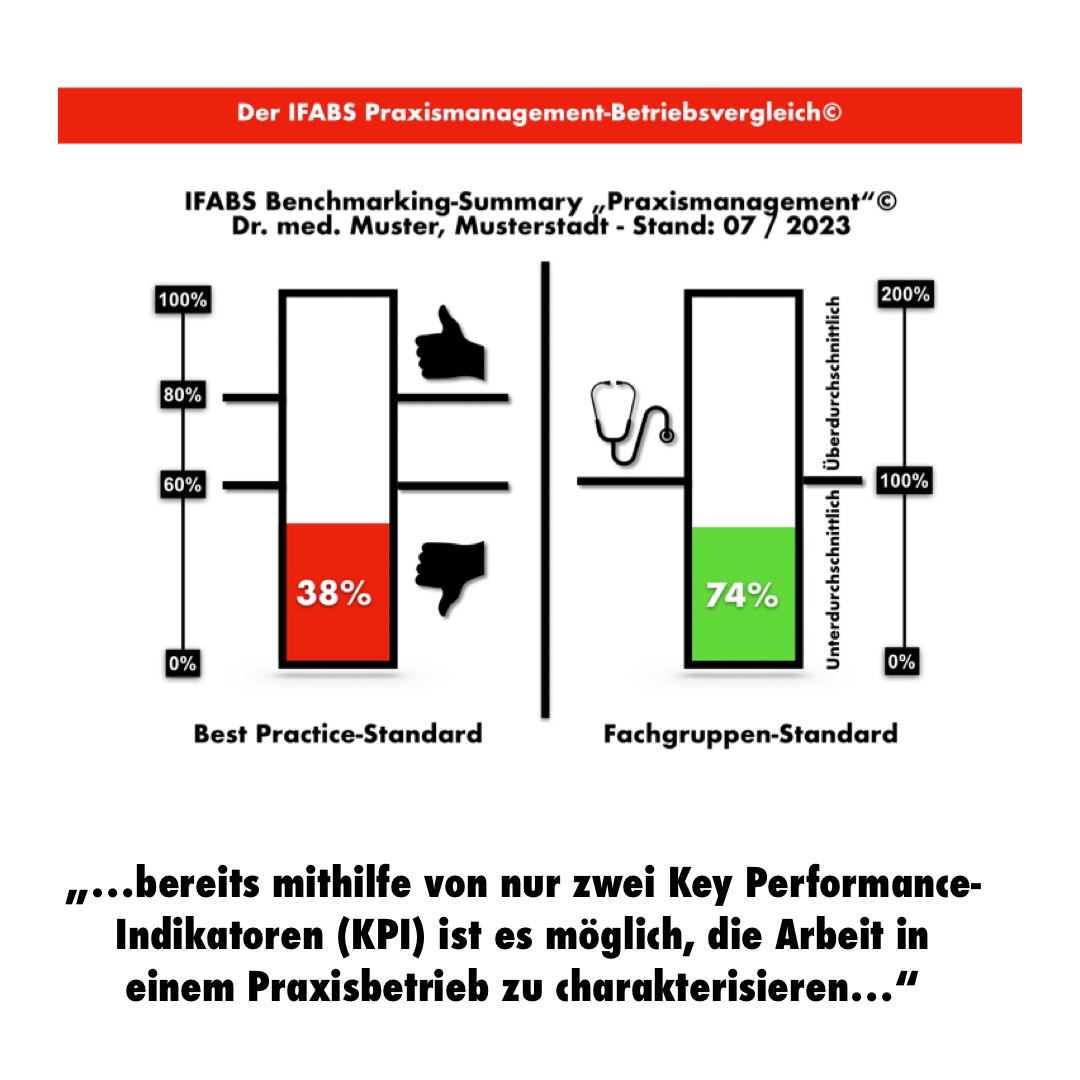
Die Benchmarking-Summary: Zwei genügen
Worum es geht
Eines der Kennzeichen des Praxismanagement-Benchmarkings ist, dass es bereits mithilfe von nur zwei Key Performance-Indikatoren (KPI) möglich ist, die Arbeit in einem Praxisbetrieb zu charakterisieren.
Digitisation of outpatient medicine: The mainstream is misleading
Data, facts and instruments on the German health system
What it’s all about
Digitisation in the outpatient sector continues to be slow, mainly due to a limiting definition on the physician side. Medical associations talk about digitalisation, but mainly refer to the telematics infrastructure (TI) and some accompanying aspects such as digital anamnesis and DTx.
Continue reading “Digitisation of outpatient medicine: The mainstream is misleading”
QuickStart-Guide zum Download: Wie MFA am besten mit unangemessenen Patientenforderungen umgehen
Getränke und freies WLAN für die Wartezeit, die Möglichkeit von Online-Terminvereinbarungen oder Anfragen-Versand per E-Mail: zu den Veränderungen, die das Gesundheitswesen in allen Bereichen prägen, zählen auch die Anforderungen der Patienten an die Arbeit von Arztpraxen. Ob und in welchem Umfang Praxis-Teams diesen Wünschen nachkommen möchten, ist eine praxisinterne Entscheidung.
Doch es gibt auch Forderungen, die die Grenze des Erlaubten und Möglichen überschreiten. In diesen Situationen müssen Medizinische Fachangestellte direkt handeln und die Bitten im persönlichen Gespräch ablehnen. Hier hat sich das „freundliche Nein“ als Technik bewährt.
Digital Therapeutice (DTx): When it comes to doctor-patient communication, benefit beats advantage
What it’s all about
A key goal of doctor-patient communication when prescribing DTx is to motivate patients to actually redeem their unlock code and use the prescribed app. The most important technique in this context is not to describe the advantages of DTx, but to show its benefits.
Praxismanagement: Cave Tunnelblick
Worum es geht
Als „Praxismanagement-Tunnelblick“ wird ein Verhalten bezeichnet, bei dem ein Haus- oder Facharzt ausschließlich auf die Praxisführung seines Betriebes fokussiert ist und wenig oder keinen Bezug zu den Gegebenheiten und Gestaltungs-Möglichkeiten herstellt, die grundsätzlich existieren. Alternative Begriffe sind “Praxismanagement-Zentriertheit” oder “Praxismanagement-Fixierung”.
The practice management benchmarking: A new imaging method in ambulatory medicine
Data, facts and instruments on the German health system
What it’s all about
The “classical” medical imaging procedures help physicians to make diagnostic-therapeutic decisions and serve the purpose of monitoring progress. Practice management benchmarking fulfills the same purpose with regard to primary care and specialty physician management with the help of ratios and their presentation.
Continue reading “The practice management benchmarking: A new imaging method in ambulatory medicine”