The competence fallacy of German general practitioners and specialists

What it’s all about

The feature most frequently mentioned in benchmarking practice analyses as part of the SWOT survey when it comes to the strengths of doctors and staff is the professional qualifications of the practice owners. However, this view is misleading and can even be dangerous for practice management. Why this is the case and what the consequences are is central to understanding modern practice management.

Continue reading “The competence fallacy of German general practitioners and specialists”

The underestimated barriers to digitalisation in German medical practices

What it’s all about

Digitalisation in the German healthcare system offers considerable potential for increasing the efficiency and quality of patient care. Nevertheless, the transformation is only progressing slowly, especially in medical practices. This is why there is an intensive debate on how the benefits of digital solutions for outpatient care can be quickly and systematically realised by GPs and specialists. The central starting point here is to overcome the scepticism and reluctance of practice owners by providing targeted information and concrete use cases. However, this attitude is only the tip of the iceberg. However, two fundamental problems remain largely unnoticed, which are an extreme obstacle to effective digitalisation: inadequate organisational and organisational structures and a lack of entrepreneurial skills and knowledge among doctors.

Continue reading “The underestimated barriers to digitalisation in German medical practices”

How the development of the future viability of management in German medical practices is impaired by the changejection trap

What it’s all about

One of the aspects analysed as part of our practice management benchmarking is whether the GP and specialist practices surveyed run as “learning practices”, i.e. whether they are continuously and actively working to systematically develop the quality of their work. The response rate is alarming not only with regard to sustainability: only just over 10% of practice owners confirm the description for their practice.

Continue reading “How the development of the future viability of management in German medical practices is impaired by the changejection trap”

Healthcare: Mastering the Medical Mindshift

❓What it’s about.

The call-to-action “Mastering the Medical Mindshift” references the urgent need for change and adaptability in modern healthcare. In an era of rapid technological advances, shifting patient expectations, and a dynamically changing operating framework, flexibility is more than just a buzzword; it’s a survival strategy.

Continue reading “Healthcare: Mastering the Medical Mindshift”

Practice management: The relationship between people management, productivity, efficiency and effectiveness

❓What it’s all about

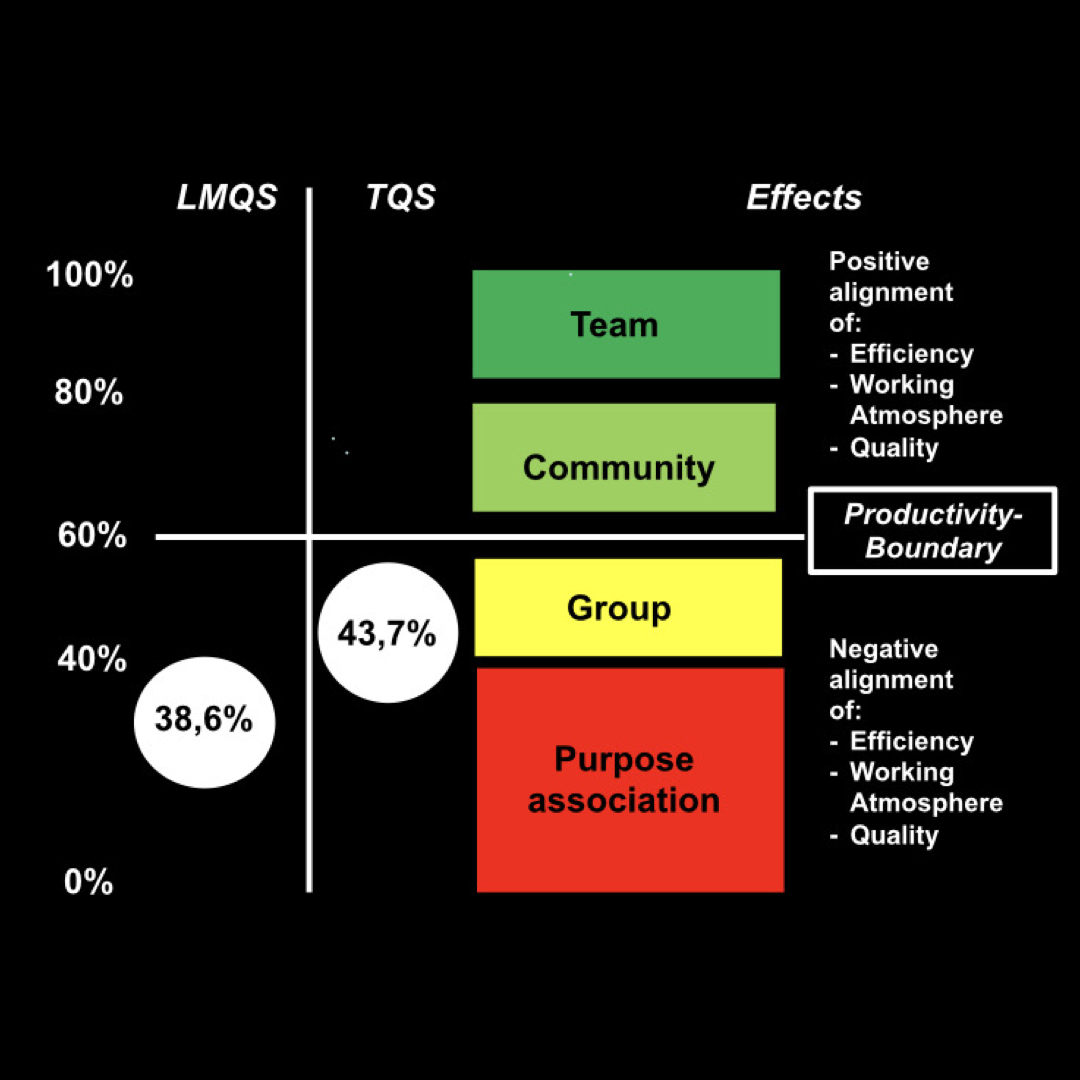
The concepts of productivity, efficiency and effectiveness are of great importance in the context of practice management and specifically in the employee management of physicians in private practice. They influence not only the operational process, but also the quality of patient care and ultimately the economic success of the practice.

➡️ Effectiveness

Effectiveness refers to the extent to which set goals are actually achieved. In a medical practice, this could be improving patient satisfaction or reducing waiting times, for example.

Effectiveness means managing staff in such a way that practice teams are successful in achieving their goals. This requires clear communication of what needs to be accomplished, regular feedback on implementation, and any adjustments to the work process.

➡️ productivity

Productivity describes the ratio of output to input in a given time frame. In a doctor’s office, the output could be the number of patients treated, while the input includes the resources used to do so, such as time, personnel and materials.

For staff management, high productivity means deploying staff in a way that makes the best use of resources. Training, clear work instructions and, of course, unambiguous communication all help to keep productivity on target.

➡️ Efficiency

Efficiency is the term used when a goal is achieved with a minimum use of resources. Thus, it is a specific form of productivity that is concerned with how well inputs are converted into outputs.

Efficiency in people management means that teams are organized in such a way that they can accomplish the given tasks in optimal time and quality. This can be achieved through good planning, proper selection and training of staff, and the use of best practices to ensure that misalignments don’t get in the way of the work.

🔄 Implementation

Productivity, efficiency, and effectiveness are closely related concepts that play a key role in employee management. By applying them correctly and monitoring them on an ongoing basis, physicians in private practice can optimize practice operations, improve patient care, and ensure financial success.

Integrating these concepts into practice management, for example through practice management benchmarking with ratios, can be a useful method is the appropriate method for this purpose. It uses the validated guideline of the Best Practice Standard for this purpose. It describes all the regulations, instruments and behaviors that are essential in the action areas of practice management, from planning to market research, organization, leadership, patient care and marketing to controlling, for work that functions smoothly even under changing requirements.


Efficient practice management: The importance of a feedback culture 🏥👨‍⚕️👩‍⚕️

What it’s all about 📜

In the modern workplace, an effective feedback culture is essential, and this naturally applies to the medical environment as well. Practice owners have a key role to play in creating a positive feedback culture in this context. The term “culture” plays a crucial role here, as it lays the foundation for the way feedback is given and received in the working environment of a medical practice. 🌐

Continue reading “Efficient practice management: The importance of a feedback culture 🏥👨‍⚕️👩‍⚕️”

Risk aversion in DiGA prescriptions: More aversion than risk

❓What it’s all about.

Digital health applications (DiGA) have become increasingly important in recent years. They offer a variety of ways to complement therapies and help patients manage their conditions. Despite the potential inherent in these technologies, many physicians in private practice are hesitant to prescribe them to their patients. One of the main arguments is often the perceived lack of data or experience with these applications. But this risk aversion not only slows down medical progress, it also contains a helpful support.

Continue reading “Risk aversion in DiGA prescriptions: More aversion than risk”

Efficiency: The bridge between high workload and work-life balance

❓What it’s all about

Managers are often faced with the challenge of managing an enormous workload while striving for a work-life balance. Harmonising both goals seems impossible for most. But a solution exists: efficient work. Efficiency can be seen as the bridge that connects these seemingly opposing goals. But how?

Continue reading “Efficiency: The bridge between high workload and work-life balance”

Mastering the medical mindshift: Why leadership is so important

Data, facts and instruments on the German health system

What it’s all about

Many established practice owners are convinced that, due to their size, they do not need any special leadership measures, since the interaction of the staff results natively from the tasks to be done and the staff already know how to help themselves when problems and questions arise. A serious mistake.

Continue reading “Mastering the medical mindshift: Why leadership is so important”