Digital therapeutics (DTx): Prescribers fail to provide patients with sufficient information

Data, facts and instruments on the German health system

What it’s all about

The penetration of digital health applications into the daily prescribing routine of primary care physicians and specialists is taking place only very hesitantly; moreover, many patients do not fill their prescriptions at all or discontinue the DTx use at an early stage. One reason for this lies with the prescribers.

Continue reading “Digital therapeutics (DTx): Prescribers fail to provide patients with sufficient information”

Successful practice management: Why the best practice standard is indispensable here

What it’s all about

For general practitioners and specialists, it is not only important to follow guidelines, rules and best practices with regard to their medical activities, but also in the design of practice management. Here, the Best Practice Standard describes all instruments, regulations and behaviour for a smoothly functioning practice.

Continue reading “Successful practice management: Why the best practice standard is indispensable here”

Mastering the medical mindshift: The quality of practice management can be objectively determined

Data, facts and instruments on the German health system

What it’s all about

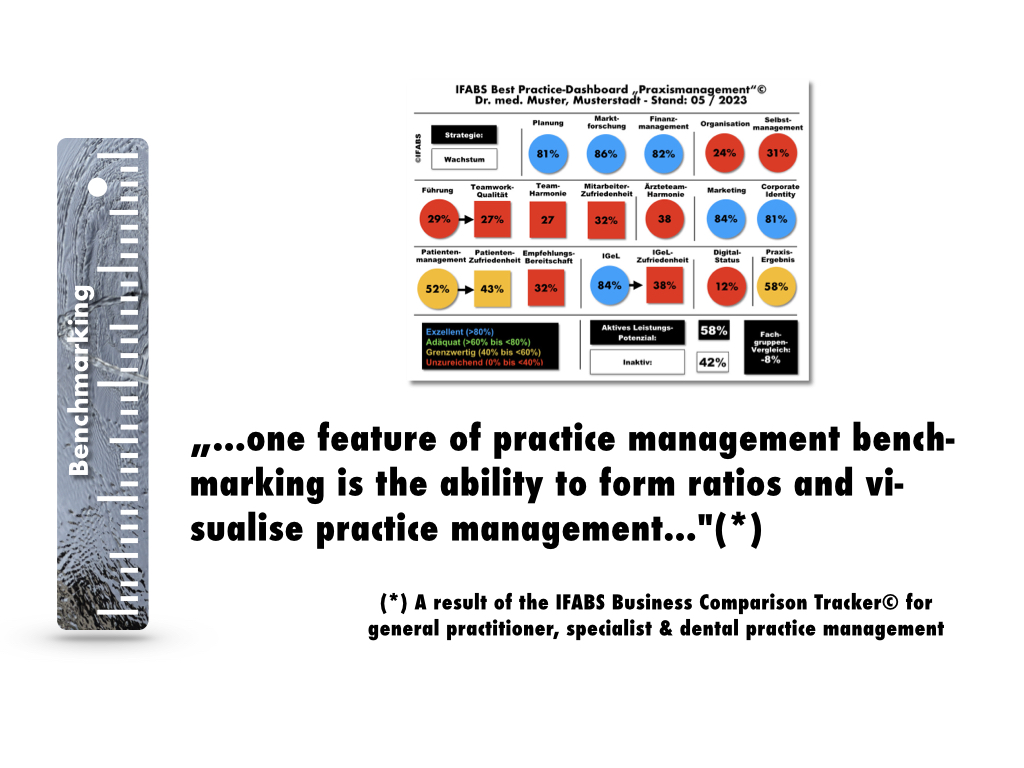
GPs and specialists often assess the quality of their practice management according to subjective criteria or indicators of patient satisfaction. But these benchmarks are far too general, unreliable and do not provide detailed, realistic information about the actual state of affairs. A performance feature of practice management benchmarking is the ability to form ratios and to visualise the entire practice management clearly at a glance. This makes it possible to make a quick and comprehensive assessment of strengths, weaknesses, threats as well as opportunities and to prospectively align the work with goals.

Continue reading “Mastering the medical mindshift: The quality of practice management can be objectively determined”

Mastering the medical mindshift: Why it’s so important to have a smoothly running practice organization

Data, facts and instruments on the German health system

What it’s all about

Practice teams are faced with the conflicting demands of their own performance, the legal and professional framework, patient requirements, social trends and economic goals. The key factor in achieving a balance in this context is the organization of the practice.

Continue reading “Mastering the medical mindshift: Why it’s so important to have a smoothly running practice organization”

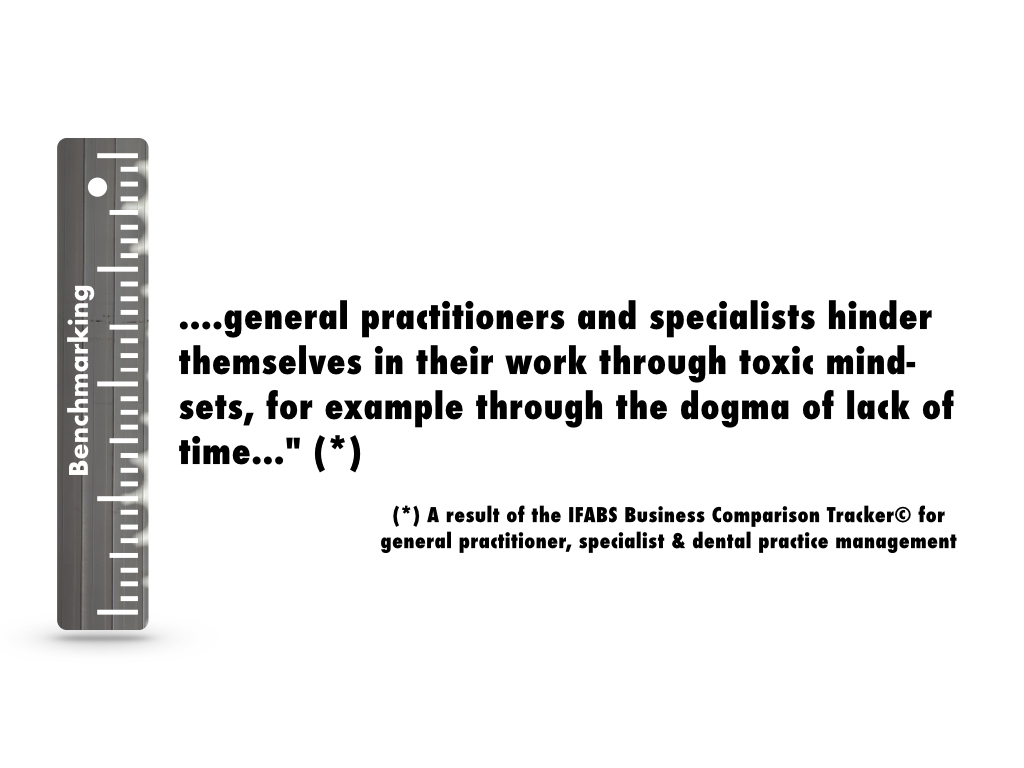
Toxic mindsets in outpatient medicine: Digitization as add-on or substitution

Data, facts and instruments on the German health system

What it’s all about

The focus of many discussions on the topic of “digitization of medical practice” is the question of how primary care physicians and specialists can build digital competence. In this context, however, it is necessary to clear out toxic mindsets that steer the understanding of the matter in the wrong direction. One is the mindset that digital solutions will complement or replace what already exists.

Continue reading “Toxic mindsets in outpatient medicine: Digitization as add-on or substitution”

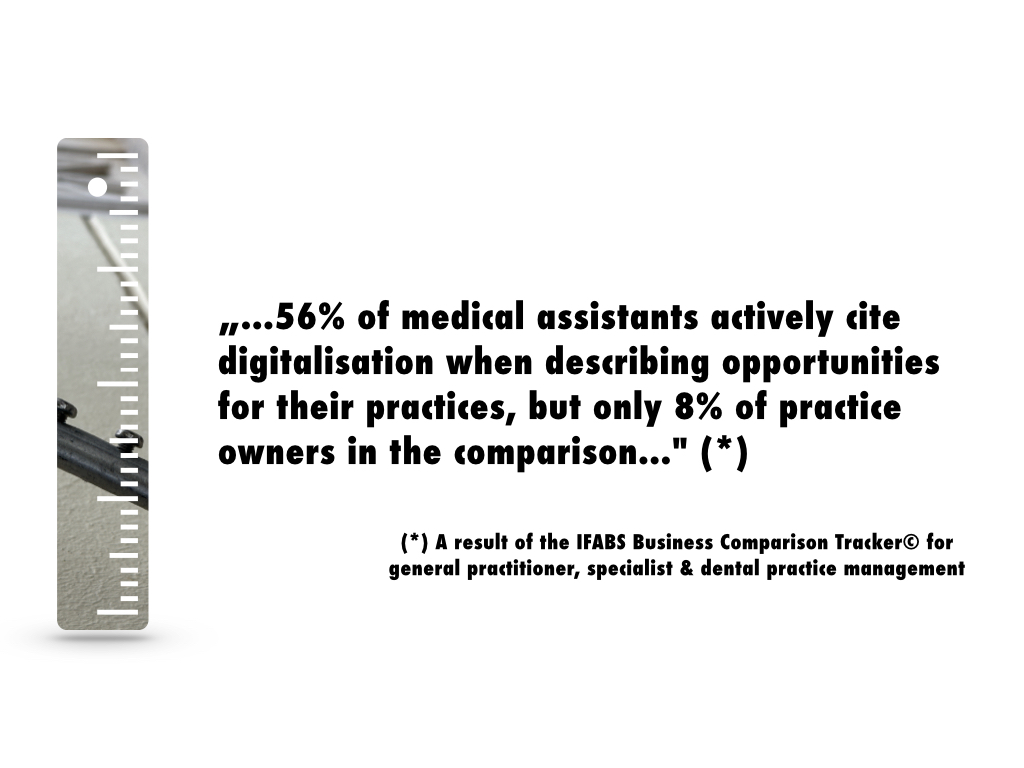
Digitisation of the medical practice: Doctors and medical assistants have different perspectives

Data, facts and instruments on the German health system

What it’s all about

The implementation and benefits of digitisation depend primarily on concrete and systematic action, not only in medical practices. However, the prerequisite for this is always a positive willingness. In GP and specialist practices, the picture is divided with regard to the latter aspect.

Continue reading “Digitisation of the medical practice: Doctors and medical assistants have different perspectives”

Healthcare: How medical professionals in clinics and practices torpedo patient communication every day with two ill-considered words

What it’s all about

Undiplomatic, clumsy, dismissive, toxic: the phrase “Yes, but…” is probably the most frequently used “killer phrase” in doctor-patient conversations.

Continue reading “Healthcare: How medical professionals in clinics and practices torpedo patient communication every day with two ill-considered words”