RethinkAlert: When Critical Thinking Becomes a Barrier – The Vicious Cycle of a Toxic Mindset in Professional and Personal Life (THOR5116)

“Openness turns critique into opportunity.”

What it’s all about

In a world where critical thinking is celebrated as the pinnacle of intellectual virtue, an insidious danger lurks beneath the surface: the very potential of this faculty is inverted by the grip of a toxic mindset. Instead of driving solutions and fostering new opportunities, destructive hypercriticism, dogmatism, and a refusal to embrace alternative perspectives obstruct personal growth and professional success. But how does such a mindset take root, and more importantly, how can it be overcome?

Continue reading “RethinkAlert: When Critical Thinking Becomes a Barrier – The Vicious Cycle of a Toxic Mindset in Professional and Personal Life (THOR5116)”

🚨RethinkAlert: “We’ve Always Done It This Way” – The Invisible Prison of Thought (THOR5046)

A Rethinking Impulse by Klaus-Dieter Thill

The RethinkAlert as a RethinkAudio – Listen. Reflect. Analyze. Advance.

What it’s all about

The habit of adhering to entrenched patterns and traditions often appears harmless, even stabilising at first glance. However, behind the seemingly secure foundation of the phrase “We’ve always done it this way” lies a cognitive trap with far-reaching implications for both our personal and professional lives. This article delves into the psychological roots of this mindset, explores its consequences, and demonstrates how the R2A formula of Rethinking can empower us to break free from its limitations.

Continue reading “🚨RethinkAlert: “We’ve Always Done It This Way” – The Invisible Prison of Thought (THOR5046)”

Toxische Mindsets: “Das hat sich bewährt”

Worum es geht

In der schnelllebigen Wirtschaftswelt und natürlich auch im Gesundheitswesen ist die Versuchung groß, an bewährten Methoden festzuhalten. Die Sätze “Das hat sich bewährt.” oder „Das ist bewährt.“ sind oft ein beruhigender Anker in der Flut neuer Trends und Theorien. Doch diese Einstellung birgt signifikante Risiken für die Entscheidungs- und Handlungsfähigkeit sowie den langfristigen Erfolg eines jeden Unternehmens.

Continue reading “Toxische Mindsets: “Das hat sich bewährt””

Gesundheitswesen: Mastering the Medical Mindshift”

❓Worum es geht

Der Call-to-Action “Mastering the Medical Mindshift” referiert auf die dringende Notwendigkeit für Veränderung und Anpassungsfähigkeit im modernen Gesundheitswesen. In einer Zeit rasanter technologischer Fortschritte, sich wandelnder Patientenerwartungen und eines sich dynamisch verändernden Handlungsrahmend ist Flexibilität mehr als nur ein Schlagwort; sie ist eine Überlebensstrategie.

Continue reading “Gesundheitswesen: Mastering the Medical Mindshift””

Arztpraxen: Fear of Mindset Opening

❓Worum es geht

Die Veränderungen des Gesundheitswesens verlangen von Haus- und Fachärzten ständige Anpassung und Weiterentwicklung. Die digitale Revolution und der Wandel in den Patientenerwartungen haben das traditionelle Modell der medizinischen Versorgung infrage gestellt. Für niedergelassene Ärzte, die oft tief in traditionellen Denkmustern verankert sind, ist dieser Wandel teilweise beängstigend, denn er verlangt ein “Mindset Opening”./

Continue reading “Arztpraxen: Fear of Mindset Opening”

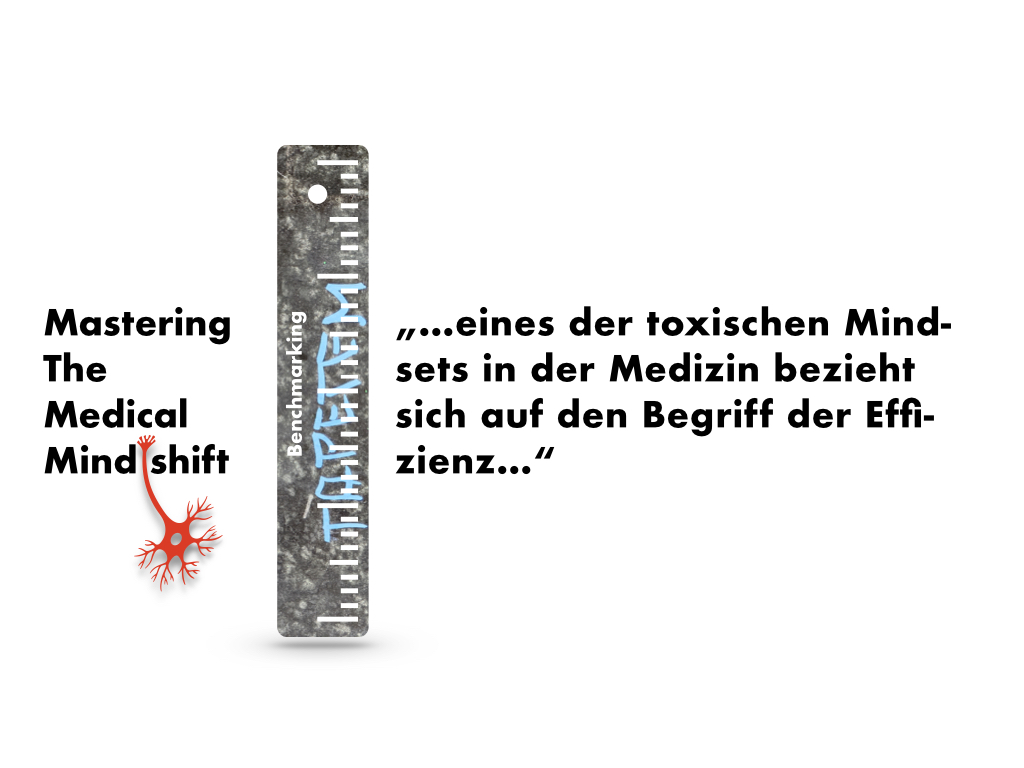
Toxische Mindsets in der ambulanten Medizin: “Effizienz ist nur ein oberflächliches Modewort“

Worum es geht

Der Begriff „Effizienz“ und das dahinter stehende Konzept der Schaffung von Handlungs-Spielräumen durch die systematische Beseitigung von Fehljustierungen des Praxismanagements besitzt auch für die Arbeit in Arztpraxen eine entscheidende Bedeutung:

Continue reading “Toxische Mindsets in der ambulanten Medizin: “Effizienz ist nur ein oberflächliches Modewort“”

Toxic dogma in outpatient medicine: “There are so few good staff!”

Data, facts and instruments on the German health system

What it’s about

They are widespread, catchy, readily accepted without scrutiny because they spare them action and self-reflection, but are false and influence physician action: toxic mindsets in ambulatory medicine. Example.

“Every physician has the staff he deserves.”

In the evaluations of the IFABS Betriebsvergleich-Tracker© for GP, specialist and dental practice management, complaints by practice owners about poor staff, who work more incorrectly and are not committed or are not committed enough, frequently stand out in the free text information provided by participants.

However, the detailed analysis of work routines, management behavior and team structures show that, regardless of what the individual practice manager understands by the attribute “good”, a large number of management errors impair the quality of work, for example

  • Lack of work objectives
  • Hardly any definition and delimitation of areas of responsibility
  • Too little freedom for independent action
  • Unclear rules of cooperation
  • Lack of support for necessary conflict resolution
  • Unequal treatment
  • Lack of unambiguous decisions
  • Too little internal communication
  • No promotion and development of skills
  • Lack of feedback on performance
  • Too little appreciation and recognition
  • Suggestions are not listened to / accepted
  • Lack of solidarity towards patients
  • Reprimands in the presence of patients
  • Moody doctors
  • Unhealthy workplaces

The remarks make it clear: doctors are responsible for the quality of their staff, apart from individual cases of actual lack of skills. Or formulated in another way:

Every doctor has the employees he deserves through his behavior and the set work framework.

Do not work in real teams in medical practices

In addition: the average Teamwork Quality Score (TQS), i.e. the satisfaction of medical assistants regarding the degree of realization of the best practice team standard in their practices, is – viewed across all specialist groups – currently only 43.7% (optimum: 100%),

i.e., groups in primary care and specialty practices generally work together, a fact that surprises many practice owners after determining the indicator for their practice.

In this form of collaboration

  • the synergy of individual activities is only slightly pronounced: people work with each other, but always only within the framework that is given; own initiative or helping out with problems are rather rare,
  • there are often unresolved and unproductive conflicts,
  • Every medical assistant strives to do her job well, but there is no sustained commitment to continuous improvement.

At the same time, however, the status is a starting point for reorganizing the work in the practice by examining the reasons more closely and adapting the conditions for cooperation accordingly.