The Rethinking Impulse as a RethinkAudio – Listen. Reflect. Analyze. Advance.
The Complexity of Decision-Making in Leadership
For leaders, decision-making is both an art and a science, fraught with challenges that can hinder progress and cause significant stress. Modern leadership involves navigating a world of complexity, ambiguity, and competing priorities. Decisions are rarely straightforward, and the consequences often ripple far beyond their immediate context. Among the most prevalent issues that leaders encounter in decision-making are:
“True mastery lies not in doing it all but in doing what matters with clarity and purpose.”
The Roots of Multitasking: A Cultural and Psychological Analysis
The belief that we can seamlessly handle multiple tasks at once has become a badge of honour in our hyperproductive world. From early education to corporate environments, we are conditioned to believe that the ability to multitask signals intelligence, efficiency, and competence.
This Rethinking Impulse challenges leaders to transcend binary thinking with the Tetralemma Principle, fostering innovative, multi-dimensional decision-making in the face of complexity.
The Rethinking Impulse as a RethinkAudio – Listen. Reflect. Analyze. Advance.
Misconceptions, Toxic Perspectives, and Misunderstandings Surrounding the Tetralemma Principle
The Tetralemma Principle is frequently misunderstood. It is often dismissed as a purely theoretical construct with little practical applicability. Many perceive it as a convoluted philosophy, devoid of tangible relevance. Another widespread assumption reduces it to a mere decision-making tool designed to expand the binary conflict between “yes” and “no.” Such misinterpretations fail to grasp the profound depth of this model, which extends far beyond rational problem-solving by incorporating systemic, emotional, and intuitive dimensions.
“Rethink, strategize, succeed – negotiation starts in your mind.”
Introduction
Negotiation is a cornerstone of our professional and personal lives. Whether navigating salary discussions, closing deals, or managing everyday agreements, successful negotiation requires clarity, strategy, and finesse. Yet, for many, the process is fraught with anxiety, hesitation, or a lack of direction, often culminating in suboptimal outcomes.
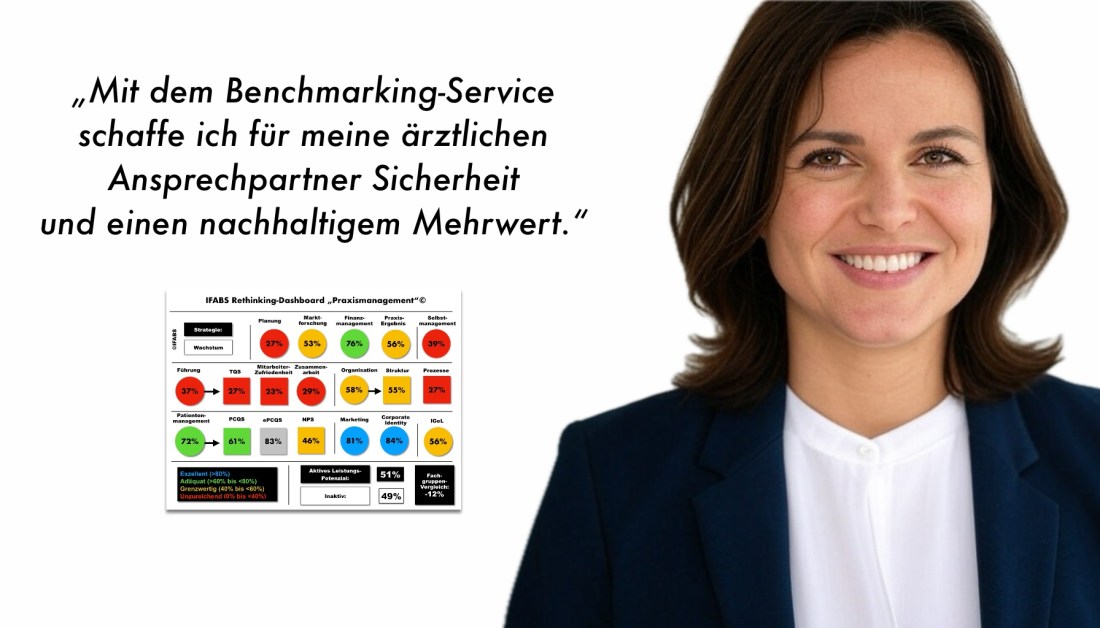
„Sicherheit stärkt Vertrauen – Benchmarking schafft Klarheit und Erfolg.“
Worum es geht
In einer Zeit, die von Unsicherheit und schnellen Veränderungen geprägt ist, gewinnt Sicherheit immer mehr an Bedeutung. Für Haus- und Fachärzte bedeutet dies, sich darauf verlassen zu können, dass die Praxisführung nicht nur funktioniert, sondern auch zukunftssicher gestaltet ist. Das Praxismanagement-Benchmarking ermöglicht, genau diese Sicherheit zu schaffen. Als Service-Leistung des Pharma-Vertriebs eingesetzt, bietet es klare Orientierung und generiert langfristigen Mehrwert für die Praxisarbeit.
This Rethinking Impulse challenges leaders to embrace the Janus Effect as a powerful tool for navigating complexity, integrating paradoxes, and fostering innovation through reflective, analytical, and resilient leadership.
The Rethinking Impulse as a RethinkAudio – Listen. Reflect. Analyze. Advance.
Misconceptions, Misinterpretations, and Toxic Mindsets
The term “Janus Effect” evokes a fascinating symbolism: it refers to the dual perspective embodied by Janus, the Roman deity with two faces, gazing simultaneously into the past and the future. Yet, this symbolic ambiguity often gives rise to misunderstandings and misinterpretations, which can have toxic repercussions, particularly in the realms of leadership and self-management. The Janus Effect is frequently associated with duplicity, dishonesty, or ambivalent behaviour. Leaders who navigate between multiple perspectives risk being perceived as opportunistic, insecure, or manipulative. Such misjudgments stem from a failure to grasp the depth and value of dualistic thinking, thereby preventing leaders from harnessing the potential of this mindset within themselves or their teams.
“I illuminate the shadows of my mind, cultivating the clarity that propels me forward.”
The Metaphor of the Image: Light and Shadow as the Balance of Self-Management
The cover image, depicting a surface traversed by sharply defined lines of light and shadow, serves as a compelling metaphor for a fundamental aspect of self-management: the process of achieving clarity. Light represents insight, focus, and the conscious design of one’s life, while shadows embody the unconscious, often overlooked dimensions of our actions and thoughts. The lines symbolise boundaries and transitions that we must deliberately draw or navigate to steer our lives in desired directions. The self-management domain addressed here is “mental clarity and intentional decision-making”, relevant to both personal and professional contexts.
Embrace RethinkingToGo and discover the transformative power of intentional decision-making in reshaping your life.
What it’s all about
Decisions shape the course of our lives – whether grand or trivial, personal or professional. Yet, despite the countless choices we make each day, selecting the “right” path often proves challenging. Stress, emotional uncertainty, and contradictory information can obstruct our decision-making processes. Common pitfalls include fear of making the wrong choice, overanalysis, or clinging to outdated patterns.