What it’s all about
Almost half of the problems in the organisation of a medical practice can be traced back to deficits in staff management. Three examples.

Structural Reconstructions
Almost half of the problems in the organisation of a medical practice can be traced back to deficits in staff management. Three examples.

Niedergelassene Ärzte haben ein distantes bis ablehnendes Verhältnis zum Begriff „Betriebswirtschaft“. Vor allem Unwissen und Vorurteile sind hierfür verantwortlich.
In stark contrast to their patients, doctors are content to identify the symptoms of practice problems instead of looking for the root causes. As a result, even in businesses whose owners are convinced that the work is running smoothly, a deep dive in the form of practice management benchmarking can identify an average of forty unactivated opportunities for improvement.
Continue reading “Practice management: problem elimination in the deep dive method”
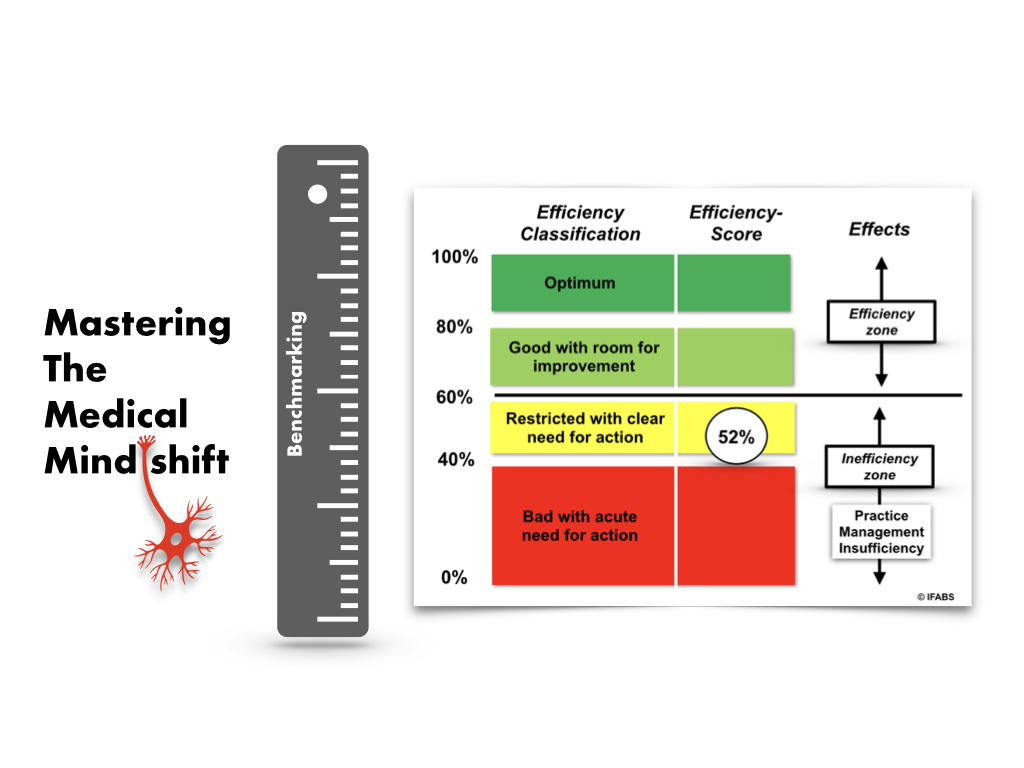
Eine bei der Führung von Haus- und Facharztpraxen zu wenig berücksichtigte Regel besagt, dass eine Arztpraxis umso effizienter arbeitet, je mehr sie den Best-Practice-Standard der Praxisführung im Praxismanagement umsetzt.
Continue reading “Arztpraxen: Insuffizienz führt zu Ineffizienz”
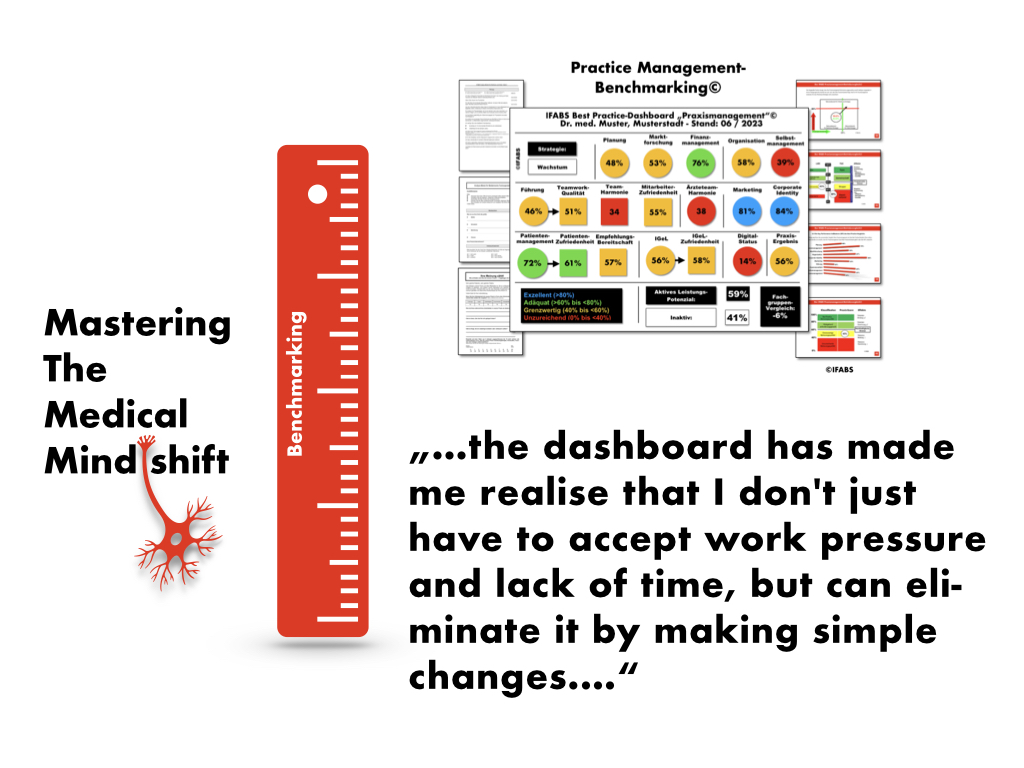
A medical monitor measures and monitors various vital signs such as heart rate, blood pressure, oxygen saturation in the blood and respiratory rate. This data provides doctors and medical staff in inpatient settings with important information about the patient’s health status so that they can then take appropriate action. Such monitors also alert when the measured values are outside the normal range to indicate potential problems. Such a monitor also exists in a figurative sense for practice management.
Continue reading “One look is enough: The Practice Management Monitor”
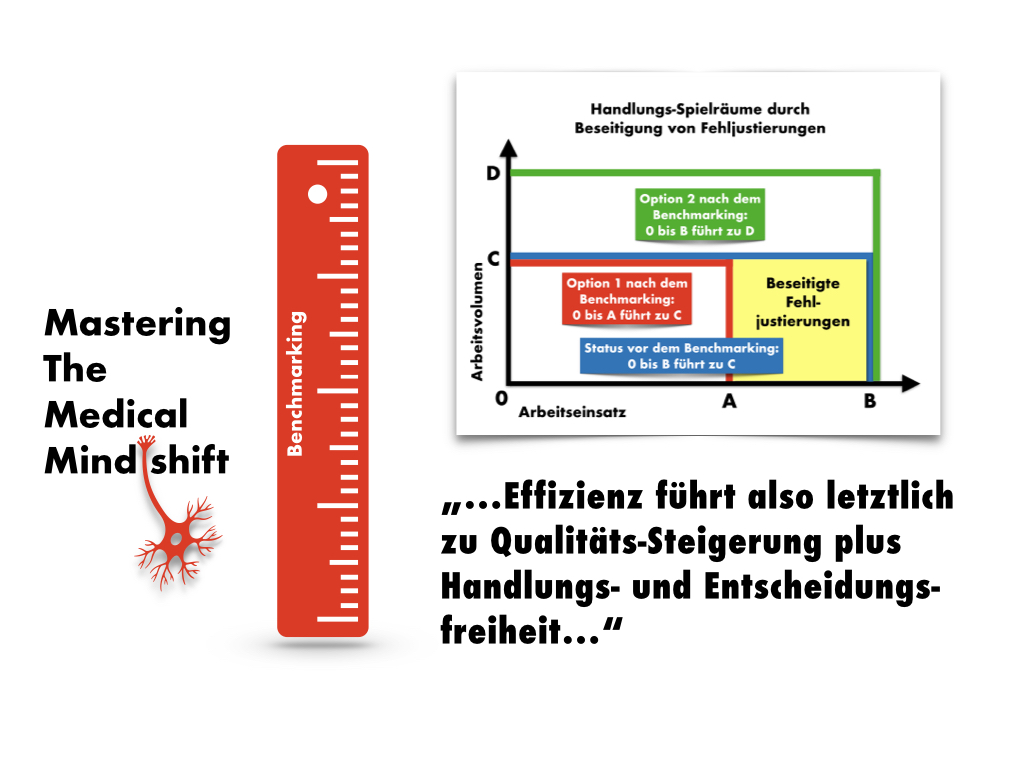
Für viele Ärzte ist Effizienz bei der Gestaltung des Praxismanagements ein negativ belastetes Buzzword und wird mit Begriffen wie „Fließbandmedizin“, „Gewinnorientierung“ oder „Entmenschlichung“ assoziiert. Doch das ist eines der toxischen Mindsets, die die ambulante Medizin prägen.
Continue reading “Ambulante Medizin: Entscheidungs-Freiheit durch Effizienz”

Cry. Forgive. Learn. Move on. Let your tears water the seeds of your future happiness” (Steve Maraboli). In addition to a basic attitude to life, the quote also expresses essential principles for the management of a medical practice.
Continue reading “General practitioners and specialists: Principles for practice management”

Der Nutzen einer Serviceleistung für Haus- oder Fachärzte ist für einen Außendienstmitarbeiter im Pharma- oder Medizintechnik-Vertrieb dann am größten, wenn das Angebot nicht nur Zufriedenheit, sondern Begeisterung schafft.
Continue reading “Pharma- und Medizintechnik-Service für Haus- und Fachärzte: 40 statt 08/15”

Data, facts and instruments on the German health system
The actions of many physicians in private practice are shaped by misguided beliefs that prevent deficits and risk factors that hinder work from being eliminated. One example is the mindset about “efficiency”.
Continue reading “Toxic Mindsets in Outpatient Medicine: ☠️ Efficiency ☠️”
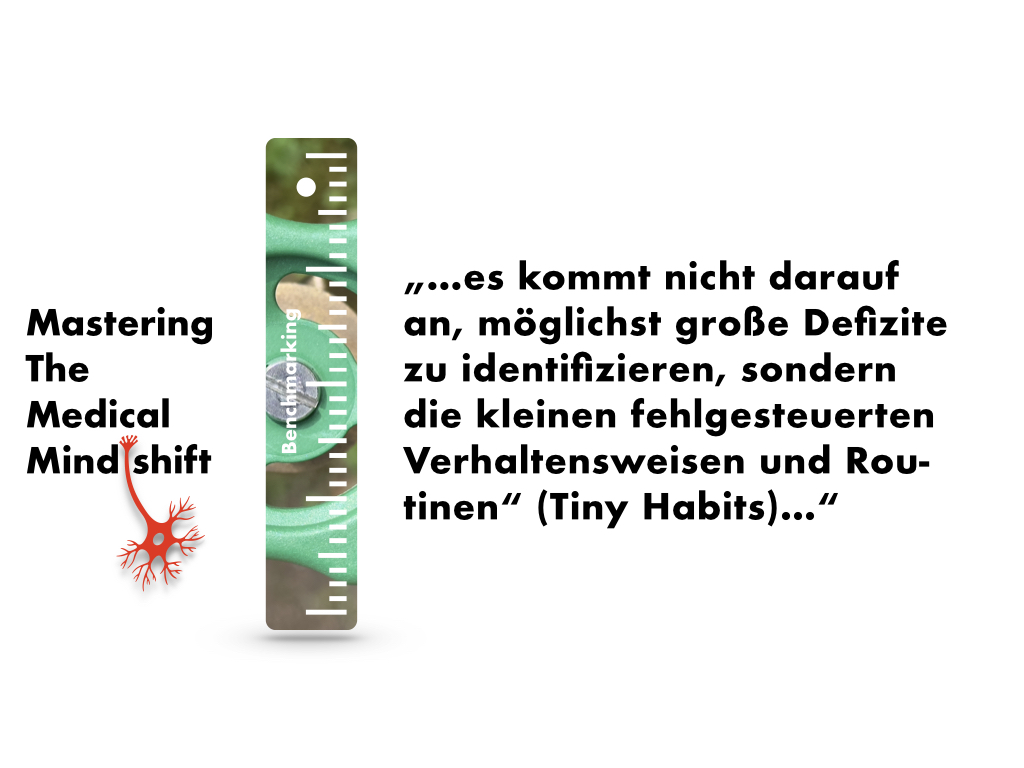
Viele Ärzte sind überzeugt, dass sie in ihren Betrieben kaum Kosten einsparen können. Doch das ist ein Irrtum, untersucht man insbesondere die Zeitverwendung, die oftmals eine Verschwendung ist und dadurch auch unnötige (Opportunitäts-) Kosten verursacht.
Continue reading “Download: Streamlining-Tipps für Haus- und Fachärzte nach der Tiny Habits-Methode”

