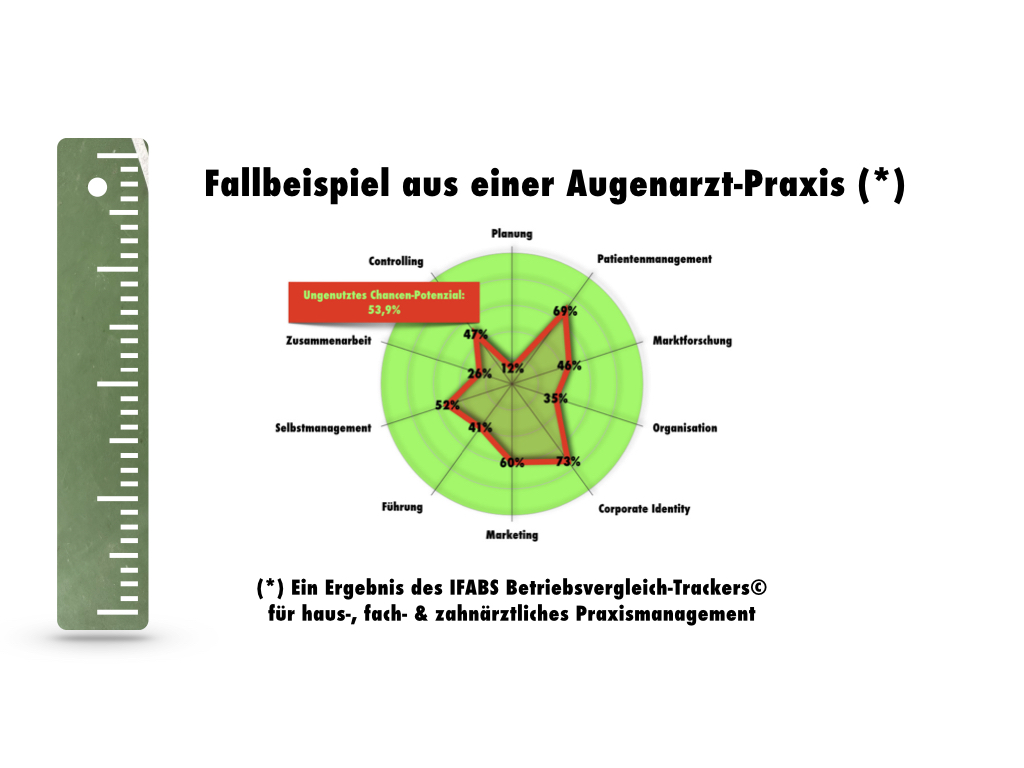
Use Case Augenarzt-Praxis: Zu viel Arbeit erfordert nicht zwangsläufig mehr Personal

Worum es geht

Die Komplexität des Praxismanagements mit seinen vielfältigen Interdependenzen zwischen den einzelnen Aktionsbereichen erschwert es Praxisinhabern, Ansatzpunkte für Veränderungen zu bestimmen, unabhängig davon, ob wahrgenommene Defizite beseitigt oder die Praxis entwickelt werden soll. Das Chancen-Radar© bietet eine einfache Lösung.

Continue reading “Use Case Augenarzt-Praxis: Zu viel Arbeit erfordert nicht zwangsläufig mehr Personal” →

Fit for the Future: Controlling Family Practice and Specialist Practice Management with the Help of Indicators

Data, facts and instruments on the German health system

What it’s all about

A smoothly functioning practice management is the central starting point for achieving all conceivable practice goals: reducing work pressure, increasing efficiency and productivity, further improving patient satisfaction, increasing success or securing the future. But how do practice owners succeed in aligning their management in this way, even in the context of dynamically changing working conditions?

Continue reading “Fit for the Future: Controlling Family Practice and Specialist Practice Management with the Help of Indicators” →

Mastering the medical mindshift: Sorgenkind Organisationsqualität

Worum es geht

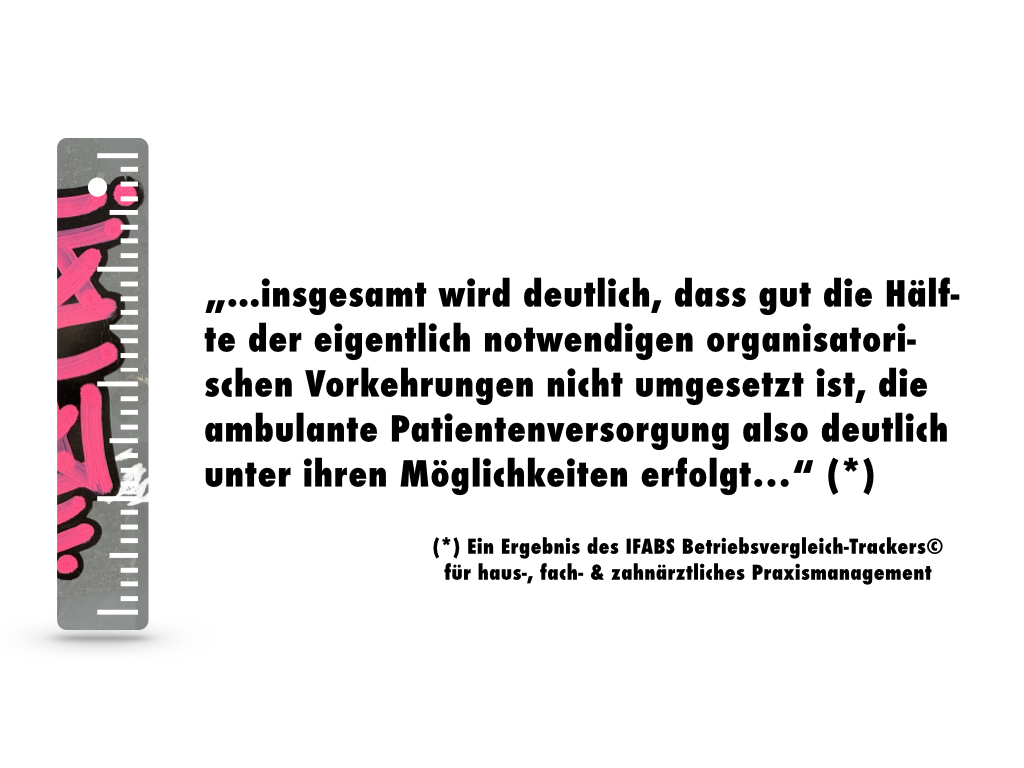
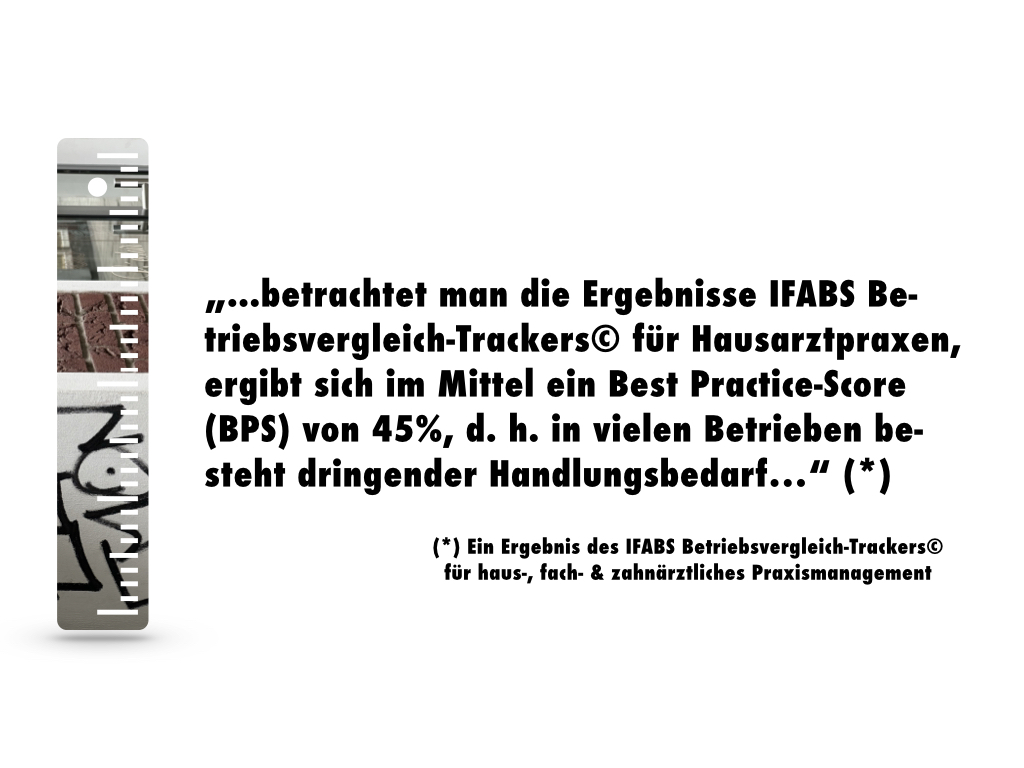
Die Funktionalität der Praxisorganisation bestimmt maßgeblich die Möglichkeiten einer individuellen Patientenbetreuung, den wirtschaftlichen Praxiserfolg und die Arbeitsbedingungen des gesamten Praxisteams. Die Resultate des IFABS Betriebsvergleich-Trackers© für haus-, fach- und zahnärztliches Praxismanagement zeigen, dass in Arztpraxen aber auf breiter Ebene Organisationsdefizite existieren.

Continue reading “Mastering the medical mindshift: Sorgenkind Organisationsqualität” →

GP and specialist consultations: Are doctors driving their patients online?

Data, facts and instruments on the German health system

What it’s all about

A recent study by the Bitkom umbrella organization shows that many patients are specifically looking for explanatory and further information on the Internet after their visits to the doctor. In addition to a fundamentally increased interest in health, medical professionals are responsible for this with patient conversations in Twitter format.

Continue reading “GP and specialist consultations: Are doctors driving their patients online?” →

Business Intelligence in Haus- und Facharztpraxen: Diese fünf Zahlen zum Praxismanagement muss jeder Praxisinhaber kennen

Worum es geht

Unter Business Intelligence (BI) in einer Arztpraxis versteht man ein Vorgehen zur Sammlung, Analyse und Überwachung von Daten, um fundierte Entscheidungen für das Praxismanagement und die Patientenbetreuung treffen zu können. Ziel ist es, ein besseres Verständnis für die Praxisbetriebsabläufe und -leistungen zu gewinnen, um das Betriebsergebnis zu verbessern und den Patientenservice zu optimieren. Fünf Indikatoren nutzen Haus- und Fachärzte dabei besonders.

Continue reading “Business Intelligence in Haus- und Facharztpraxen: Diese fünf Zahlen zum Praxismanagement muss jeder Praxisinhaber kennen” →

Future of the medical practice: Clear need for development of in-house physician cooperations

Data, facts and instruments on the German health system

What it’s all about

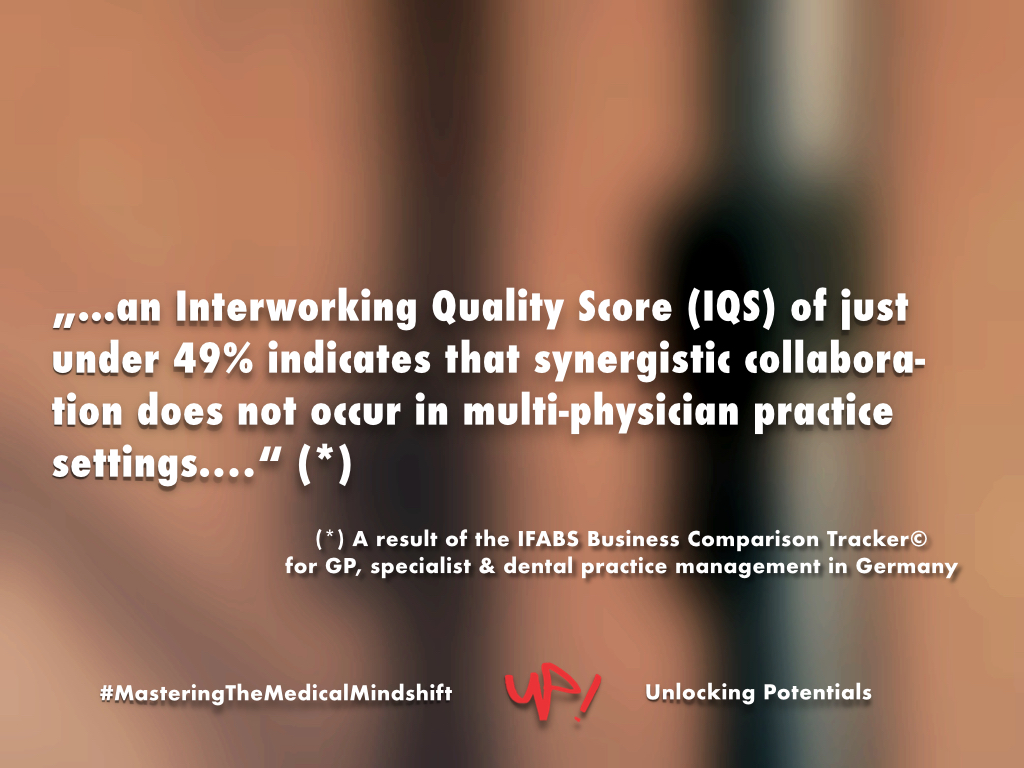
A key prerequisite for smooth practice management functionality in practices with multiple physicians is that the medical team largely harmonizes in its leadership and management behavior and “pulls in the same direction.” Disruptions to harmony have a direct negative impact on teamwork and staff work performance.

Continue reading “Future of the medical practice: Clear need for development of in-house physician cooperations” →

Toxische Mindsets in der ambulanten Medizin: „Führung ist zeitaufwendig.“

Worum es geht

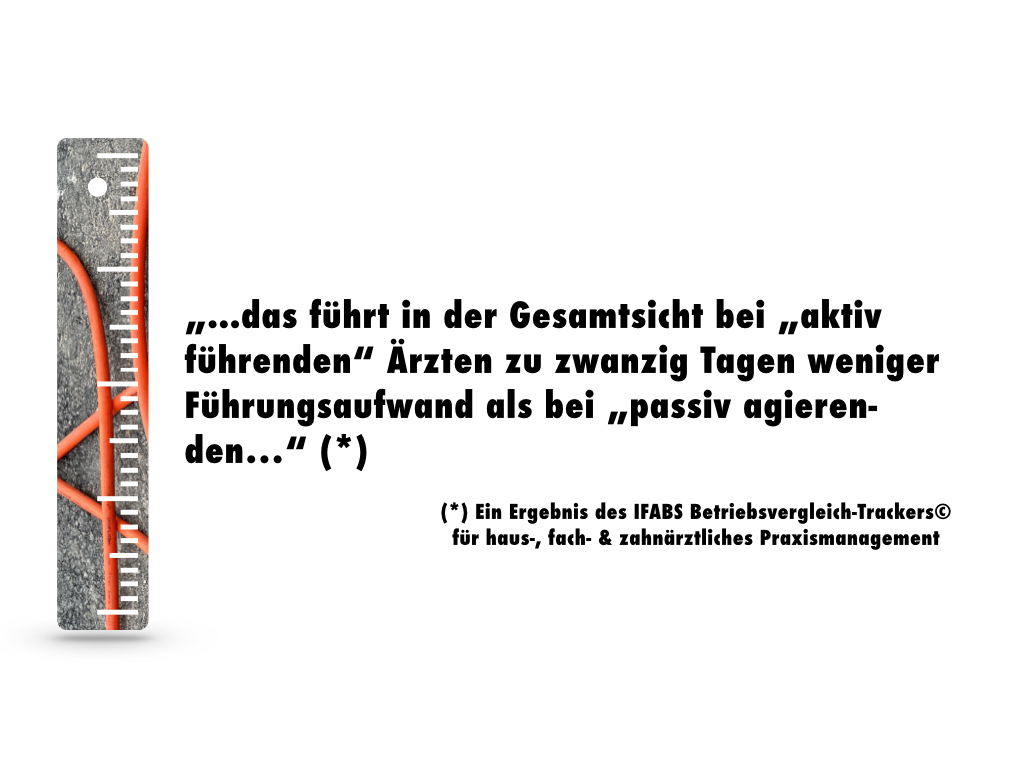
Praxismanagement-Betriebsvergleiche und Arbeitsanalysen zeigen: „führungsaktive“ Praxisinhaber sparen im Vergleich zu ihren „führungspassiven“ Kollegen durchschnittlich zwanzig Tage pro Jahr bei der Steuerung ihres Personals.

Continue reading “Toxische Mindsets in der ambulanten Medizin: „Führung ist zeitaufwendig.“” →

Better efficiency and higher productivity through digitization in the medical practice: A case study

Data, facts and instruments on the German health system

What it’s all about

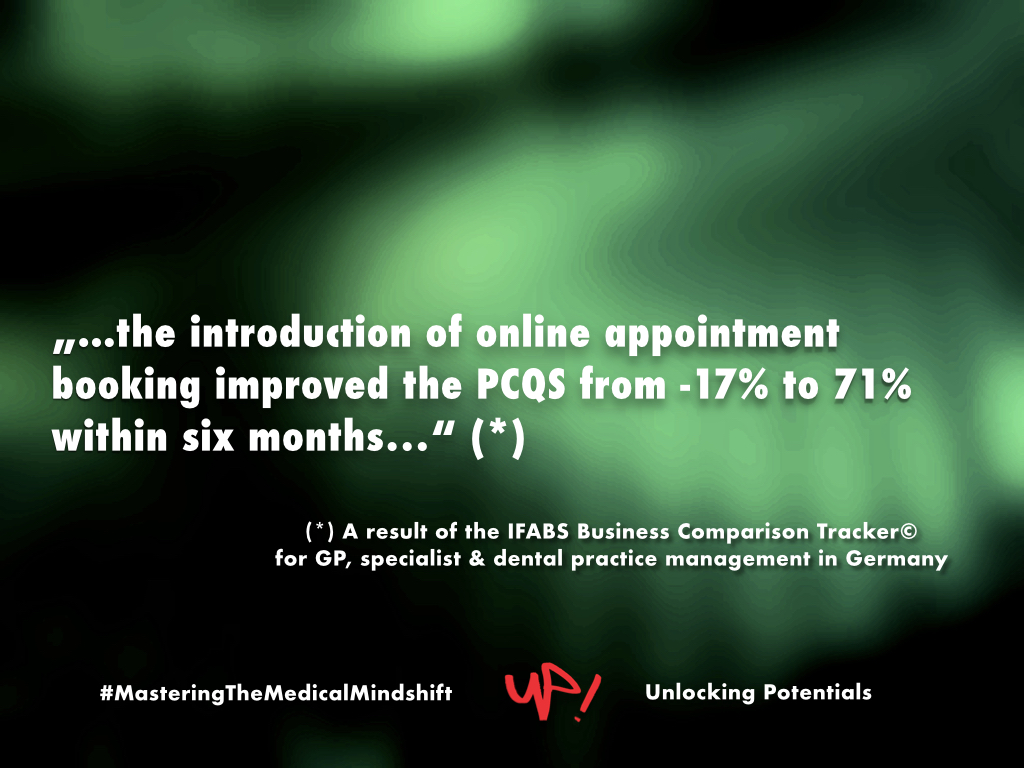
How can the introduction of digital tools benefit a medical practice? This case study on the introduction of a system for online appointment booking shows it.

Continue reading “Better efficiency and higher productivity through digitization in the medical practice: A case study” →

Performance von Medizinischen Versorgungs-Zentren (MVZ): Ungenutzte Leistungs-Reserven bei der Teamwork-Qualität

Worum es geht

Praxismanagement-Kennziffern, die Key Performance Indikatoren (KPI), werden benötigt, um die Komplexität des Praxismanagements in Medizinischen Versorgungs-Zentren zu verdichten, die Gegebenheiten und Interaktionen der Aktions-Bereiche überschaubar zu machen, den Leistungs-Status zu diagnostizieren, ungenutzte Leistungsreserven zu identifizieren und die Betriebsführung gezielt zu steuern.

Nur wer die Leistungsdaten des Praxismanagements seines Betriebes genau kennt, kann sowohl medizinisch als auch wirtschaftlich nachhaltig erfolgreich arbeiten.

Das gilt auch für die Mitarbeiter-Führung und die Zusammenarbeit in Form einer “echten” Teamstruktur.

Continue reading “Performance von Medizinischen Versorgungs-Zentren (MVZ): Ungenutzte Leistungs-Reserven bei der Teamwork-Qualität” →

Toxic Mindsets in Family and Specialist Practices: “We’re a Team!”

Data, facts and instruments on the German health system

What it’s all about

“Alone we can do so little, together we can do so much.” (Helen Keller)

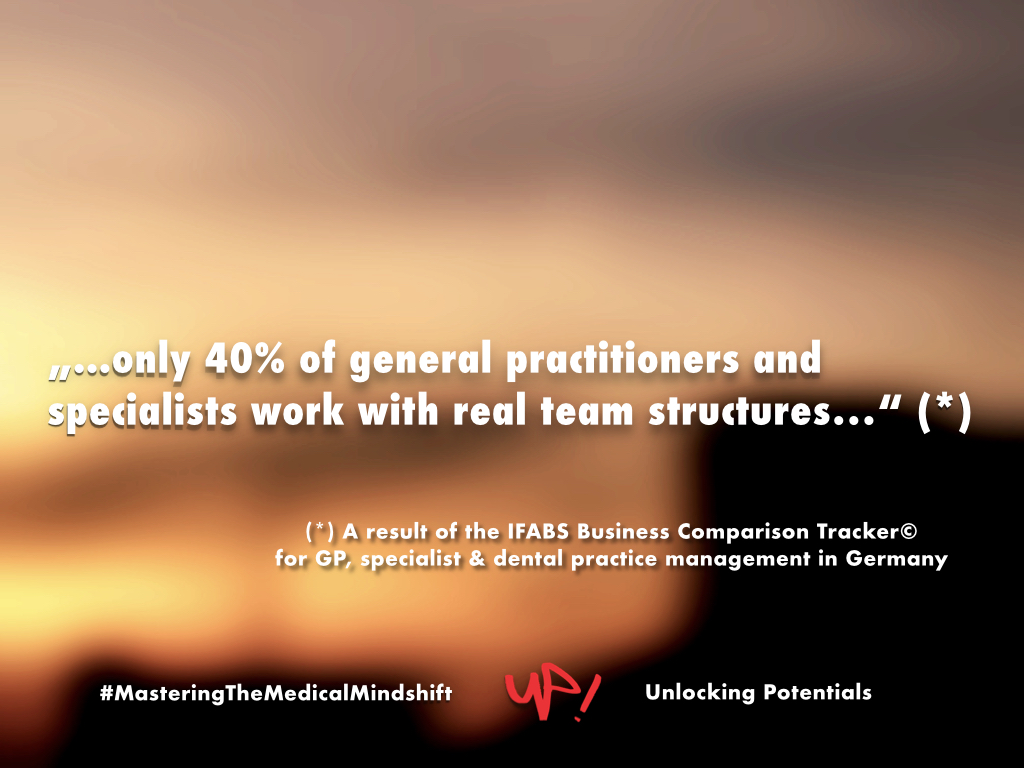
They are widespread, catchy, readily accepted without scrutiny because they spare them action and self-reflection, but are false and influence physician action: toxic mindsets in outpatient medicine. One example is the statement, “We are a team.” No term is used more frequently in the external presentation of medical practices, e.g., on websites, than the term “team.” Yet the reality is that in most practices, there is no team-based collaboration at all. This has far-reaching negative effects on efficiency, productivity and quality of results.

Continue reading “Toxic Mindsets in Family and Specialist Practices: “We’re a Team!”” →