Worum es geht
Die Ergebnisse aus Patientenbefragungen in Haus- und Facharztpraxen führen häufig zu falschen Reaktionen aufseiten der Praxis-Teams. Zwei Gründe sind hierfür verantwortlich.

Structural Reconstructions
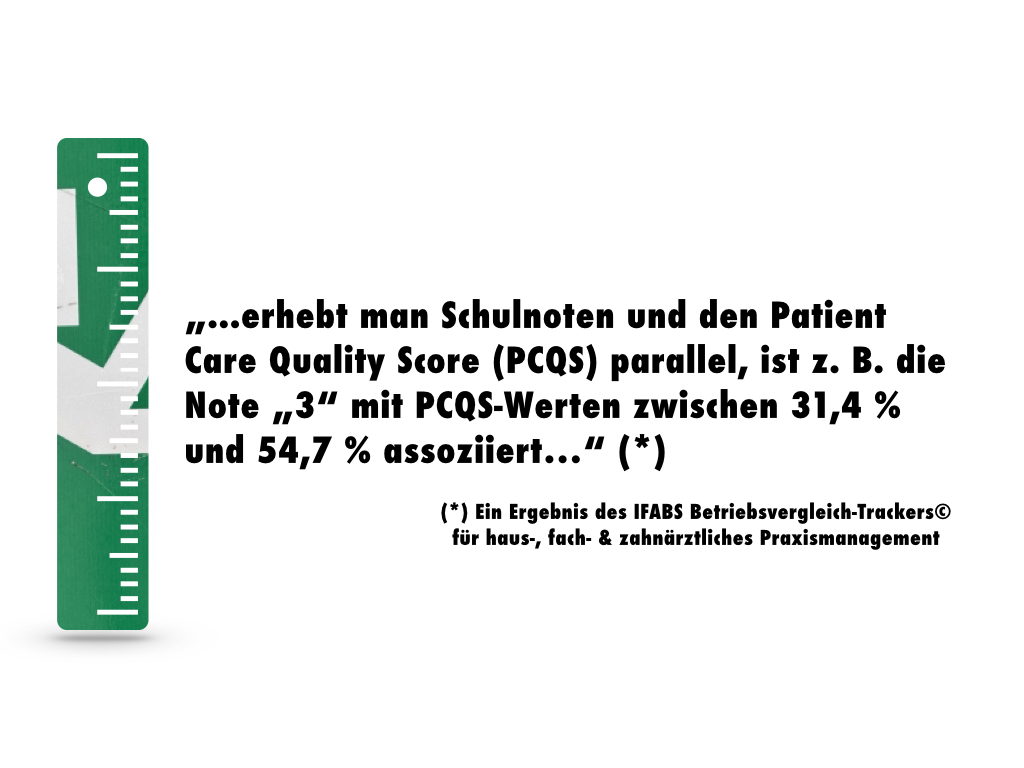
Die Ergebnisse aus Patientenbefragungen in Haus- und Facharztpraxen führen häufig zu falschen Reaktionen aufseiten der Praxis-Teams. Zwei Gründe sind hierfür verantwortlich.
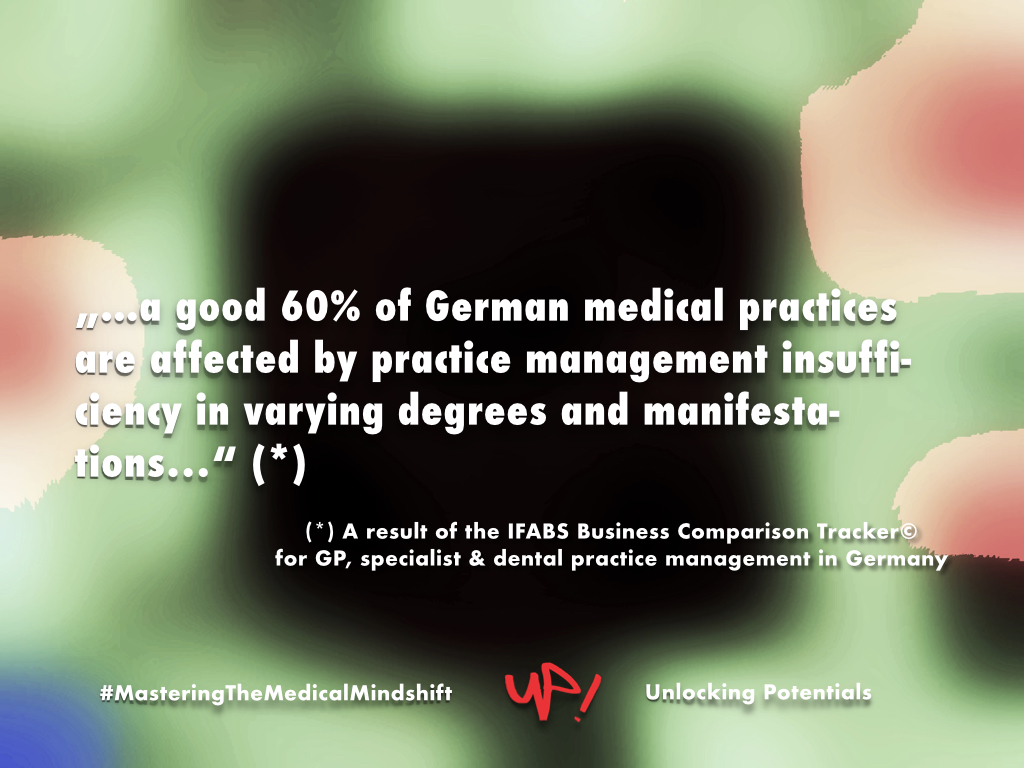
Data, facts and instruments on the German health system
Attempts to optimize practice management are often very difficult for general practitioners and specialists due to its complex structure and the multiple interactions of the action areas. The use of visualization technology solves this problem.
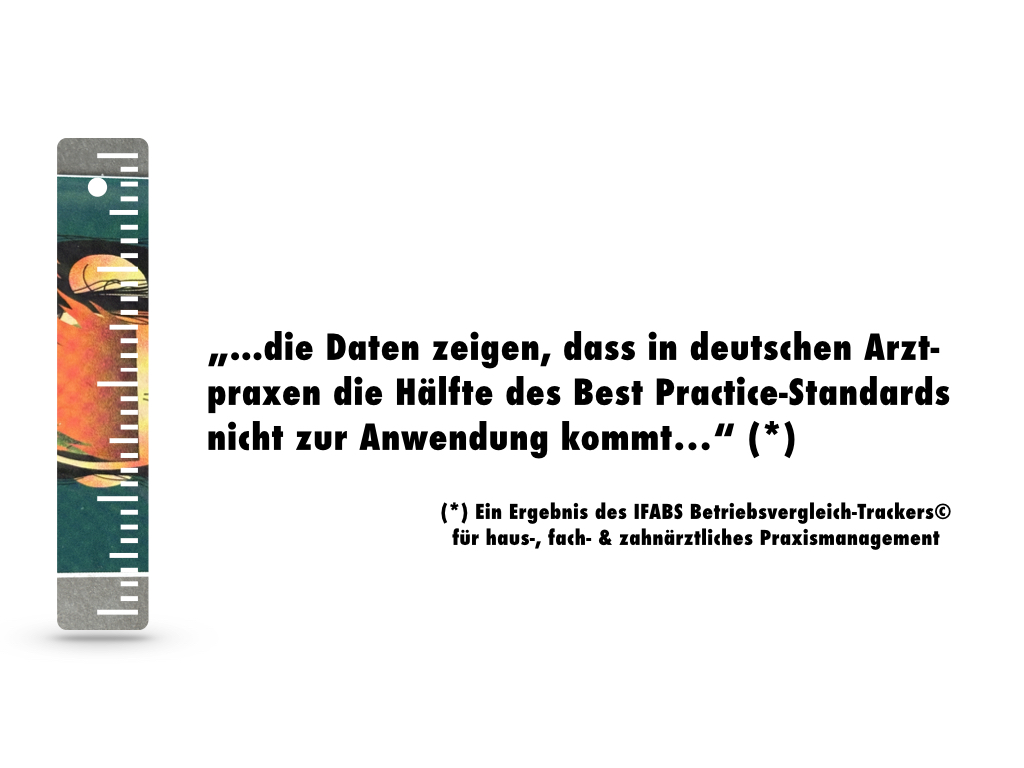
In Fachpublikationen, Seminaren und Veranstaltungen wird häufig von der Qualität des Praxismanagements gesprochen. Es zeigt sich jedoch, dass die Verwendung meist als Floskel erfolgt und es hierfür an einer inhaltlichen Unterfütterung fehlt. Dabei ist die Definition ganz einfach und pragmatisch.

Data, facts and instruments on the German health system
They are widespread, catchy, readily accepted without scrutiny because they spare them action and self-reflection, but are false and influence physician action: toxic mindsets in ambulatory medicine. Example.
In the evaluations of the IFABS Betriebsvergleich-Tracker© for GP, specialist and dental practice management, complaints by practice owners about poor staff, who work more incorrectly and are not committed or are not committed enough, frequently stand out in the free text information provided by participants.
However, the detailed analysis of work routines, management behavior and team structures show that, regardless of what the individual practice manager understands by the attribute “good”, a large number of management errors impair the quality of work, for example
The remarks make it clear: doctors are responsible for the quality of their staff, apart from individual cases of actual lack of skills. Or formulated in another way:
Every doctor has the employees he deserves through his behavior and the set work framework.
In addition: the average Teamwork Quality Score (TQS), i.e. the satisfaction of medical assistants regarding the degree of realization of the best practice team standard in their practices, is – viewed across all specialist groups – currently only 43.7% (optimum: 100%),
i.e., groups in primary care and specialty practices generally work together, a fact that surprises many practice owners after determining the indicator for their practice.
In this form of collaboration
At the same time, however, the status is a starting point for reorganizing the work in the practice by examining the reasons more closely and adapting the conditions for cooperation accordingly.
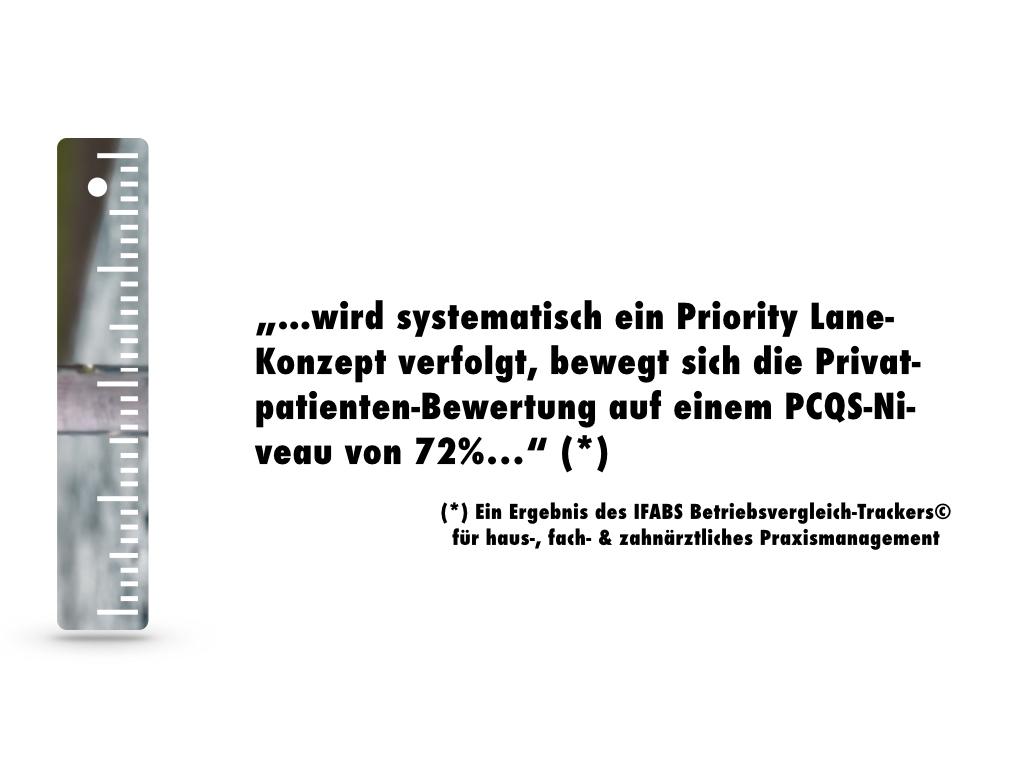
Ein Teil der Haus- und Fachärzte ist überzeugt, dass es nicht notwendig sei, bei gleicher medizinischer Versorgungsqualität im Rahmen der Angebote des Praxismanagements zwischen Kassen- und Privatpatienten zu differenzieren. Ein anderer Teil arbeitet mit Priority Lane-Ansätzen, auch wenn ärztliche Standesorganisationen diesen Sachverhalt bestreiten. Wie sehen die Ergebnisse im Vergleich aus?

Data, facts and instruments on the German health system
The central goal of the digital transformation of healthcare is to increase the quality of care. But the fulfillment of this objective will fail in the outpatient sector if the practice management insufficiency that prevails here is not eliminated at the same time.

Digitale Gesundheitsanwendungen (DiGA) performen seit ihrer Einführung äußerst schlecht. Die Ursachenanalyse zeigt, dass zwei Mindset-Bugs, ergänzt um zwei weitere „handwerkliche“ Fehler eine substanzielle Verbreitung torpedieren.
Continue reading “DiGA: Wie zwei Mindset-Bugs und zwei Konsultations-Fehler den Einsatz behindern”
Data, facts and instruments on the German health system
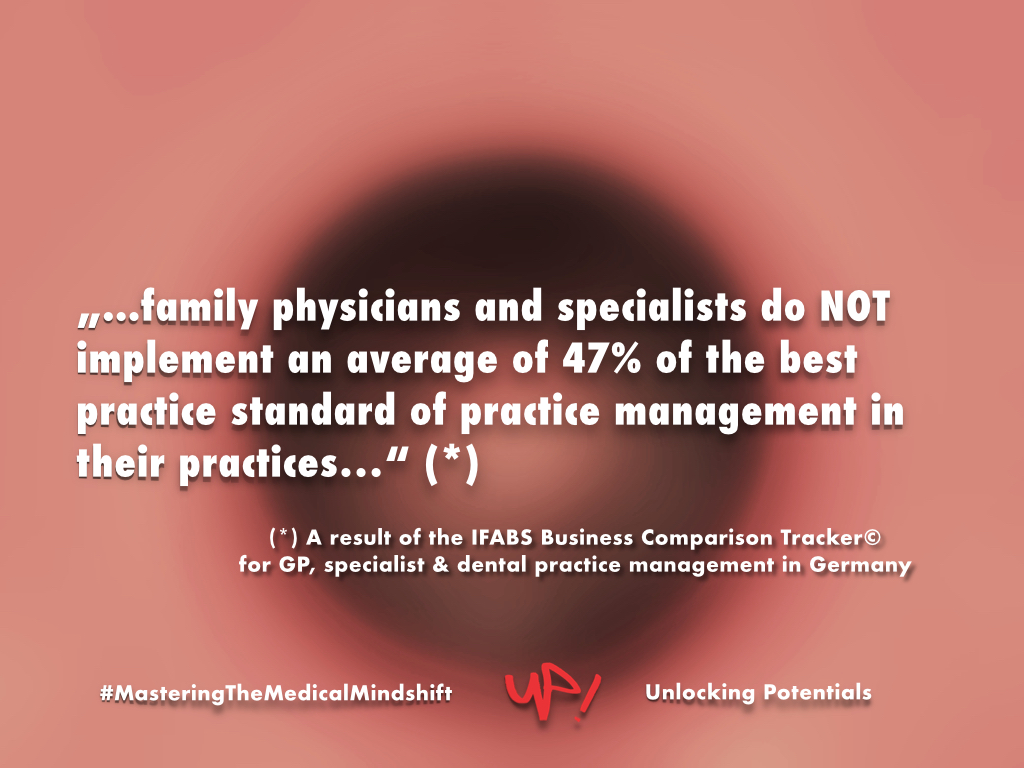
Physicians in private practice have a distant or even negative attitude towards the term “business administration”. Above all, ignorance and prejudices are responsible for this. But this attitude means that important tools that can improve patient care, ensure the flexibility needed for transformation in the medium term, and secure practice success in the long term are not being used. But this situation is about to change.
Continue reading “Outpatient care of the future: Not without business knowledge”
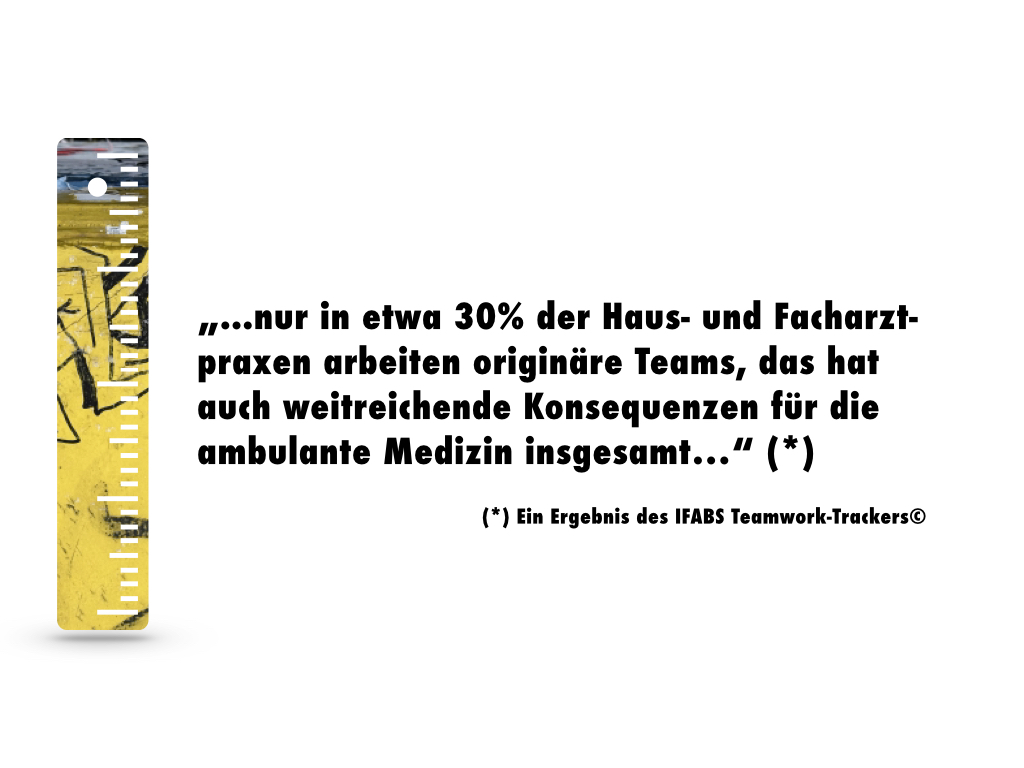
Die Resultate des IFABS Teamwork-Trackers© zeigen, dass in Haus- und Facharztpraxen größtenteils keine „echten“ Teams arbeiten, sondern lediglich Gruppen. Dadurch schränken Praxisinhaber fahrlässig die Effizienz und Produktivität ihrer Betriebe ein, schmälern die Qualität der Patientenversorgung, steigern die Kosten und reduzieren ihren Erfolg. Aggregiert betrachtet leidet dadurch aber auch die Leistungsfähigkeit der ambulanten Medizin insgesamt.
Continue reading “Mindset-Bugs in der ambulanten Medizin: „Wir arbeiten als Team zusammen!“”
Data, facts and instruments on the German health system
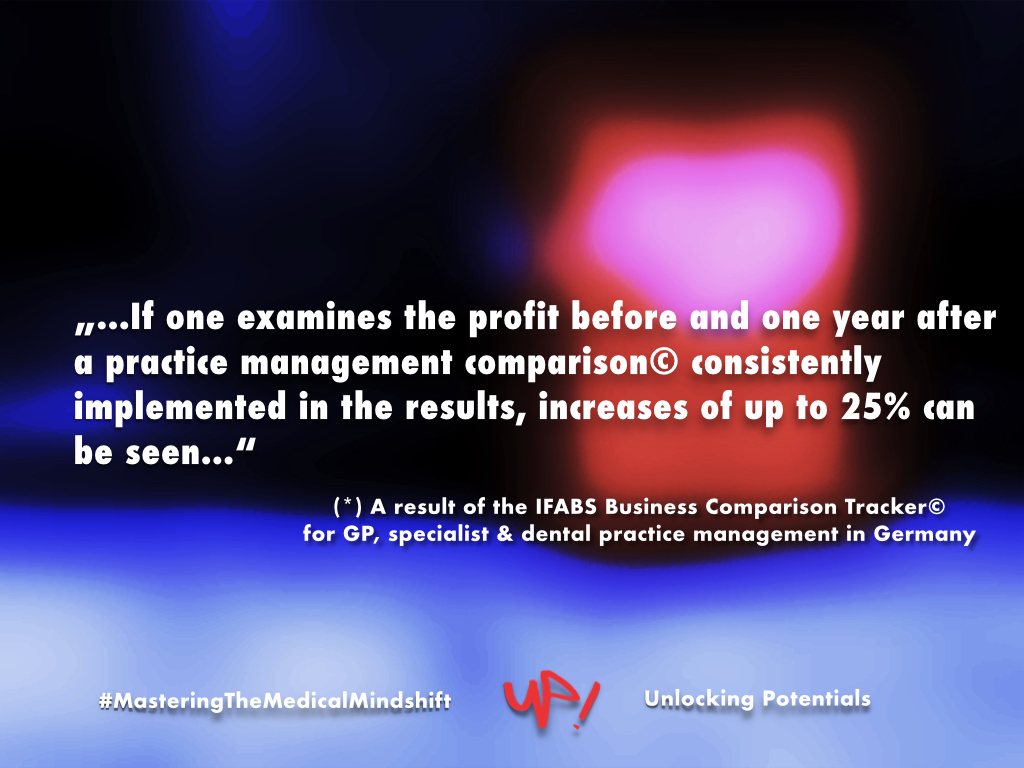
The results of the IFABS Betriebsvergleich-Tracker© for GP and specialist practice management show that deficits exist in almost every medical practice, the elimination of which could significantly improve the entrepreneurial scope of action and the financial result.
If one examines the profit before and one year after a practice management comparison© consistently implemented in the results, increases of up to 25% are found.

