Continue reading “When Every Decision Travelled Upwards”From 2049, constant escalation looked less like careful management than a structure that had forgotten where decisions belonged.
When Every Decision Travelled Upwards

Structural Reconstructions
Continue reading “When Every Decision Travelled Upwards”From 2049, constant escalation looked less like careful management than a structure that had forgotten where decisions belonged.
Continue reading “The Organisations That Worked Because People Compensated for Their Structure”They called it commitment. From 2049, much of it looked like structural compensation.

Continue reading “The Decisions Managers Kept Making Long After They Had Stopped Being Decisions · A Reconstruction from 2049”Managers thought they were making decisions. Often, they were merely repeating choices the organisation had failed to structure.

Organisations rarely fail because of a single dramatic event. More often, they gradually transfer operational reliability from their structures to the people who quietly compensate for structural weaknesses. This structural reconstruction explores why visible performance can conceal growing fragility and why later history often explains organisational collapse very differently from those who experienced it.
Continue reading “Why Organisations Rarely Collapse Overnight · R2049 Method”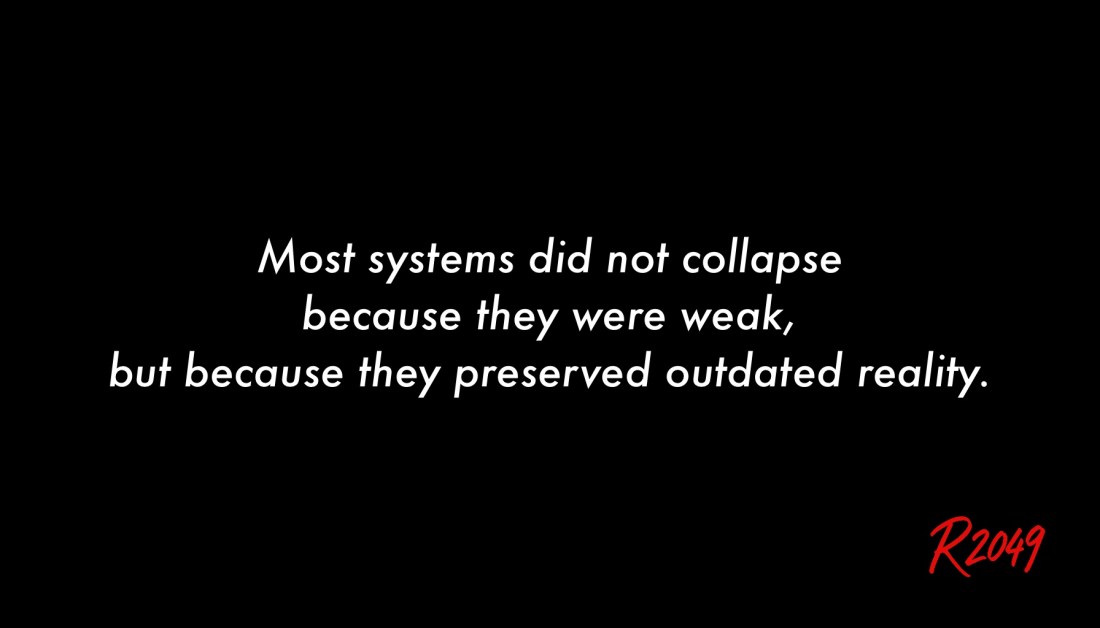
This article explores how operational efficiency, organisational optimisation, structural resilience, leadership, organisational learning, cognitive flexibility, system thinking and strategic adaptation evolved between the 2020s and the late 2030s. From the perspective of the structural reconstructions of 2049, it explains why many organisations remained operationally successful while progressively losing their capacity to reinterpret reality. It introduces the concepts of Structural Deceleration of Insight and Efficiency-Induced Future Blindness as two defining structural mechanisms that fundamentally reshaped modern leadership theory.
Continue reading “The Most Dangerous Organisations Appeared Perfectly Functional · R2049 · Structural Reconstructions”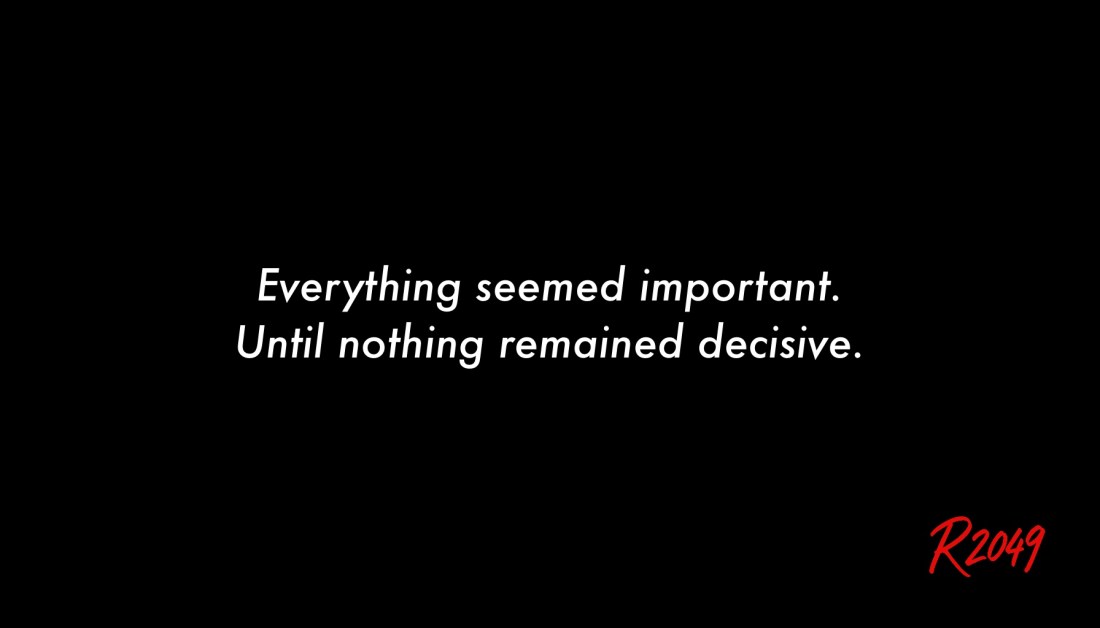
One of the most persistent misconceptions of modern organisational thinking was the belief that complexity itself represented the primary threat to organisational stability. As markets accelerated, technologies evolved, and stakeholder expectations expanded, organisations invested enormous resources into systems designed to manage growing complexity. Agile frameworks, governance models, communication architectures, collaboration platforms, reporting systems, and analytics infrastructures all emerged from the same assumption: if complexity could be controlled, stability would follow.
Looking back, this diagnosis appears incomplete.
Continue reading “Priority Instability · R2049 Structural Reconstructions”
This article explores how social overcompensation, artificial consensus cultures, and conflict avoidance weakened highly advanced organisations during the 2020s and 2030s. From the perspective of 2049, it explains why many companies became technologically smarter while simultaneously losing their ability to process disagreement, tension, and strategic reality. Key concepts include organisational behaviour, leadership systems, psychological safety, dissent capability, collective intelligence, strategic clarity, and epistemic resilience.
Continue reading “The Most Intelligent Systems Did Not Fail Because of Technology, They Failed Because of Social Overcompensation · R2049 Structural Reconstructions”
This article examines how emotional fragility, conflict avoidance, and excessive psychological smoothing shaped organisations in the early 21st century. From the perspective of 2049, it explains why many companies weakened their own resilience by avoiding productive tension, softening communication, and confusing emotional comfort with organisational stability. Key concepts include psychological safety, leadership culture, conflict capability, emotional resilience, organisational behaviour, strategic clarity, and system stability.
Continue reading “The Most Dangerous Organisations Were Not Authoritarian, They Were Emotionally Exhausted · R2049 · Structural Reconstructions”
This structural reconstruction examines the relationship between decision speed, organisational effectiveness, complexity, and understanding. It explores why speed became one of the dominant management objectives of the early twenty-first century and why accelerated decision-making often reduced organisational performance in complex environments. Core concepts include decision quality, complexity management, organisational learning, strategic judgement, structural alignment, and system dynamics.
Continue reading “Speed Was Never the Advantage. It Was the Wrong Answer to the Wrong Question · R2049 · Structural Reconstructions”
This structural reconstruction analyses the common organisational and social phrase “We’ve always done it this way.”
The article explores structural continuity, organisational routines, inherited processes, decision history, operational stability, institutional memory, behavioural persistence, path dependency, structural adaptation, and human systems. From a 2049 perspective, many established practices survived not because they remained effective, but because their original reasons were no longer visible.
Continue reading ““We’ve Always Done It This Way.” · R2049 · Structural Reconstructions” R2049
R2049 